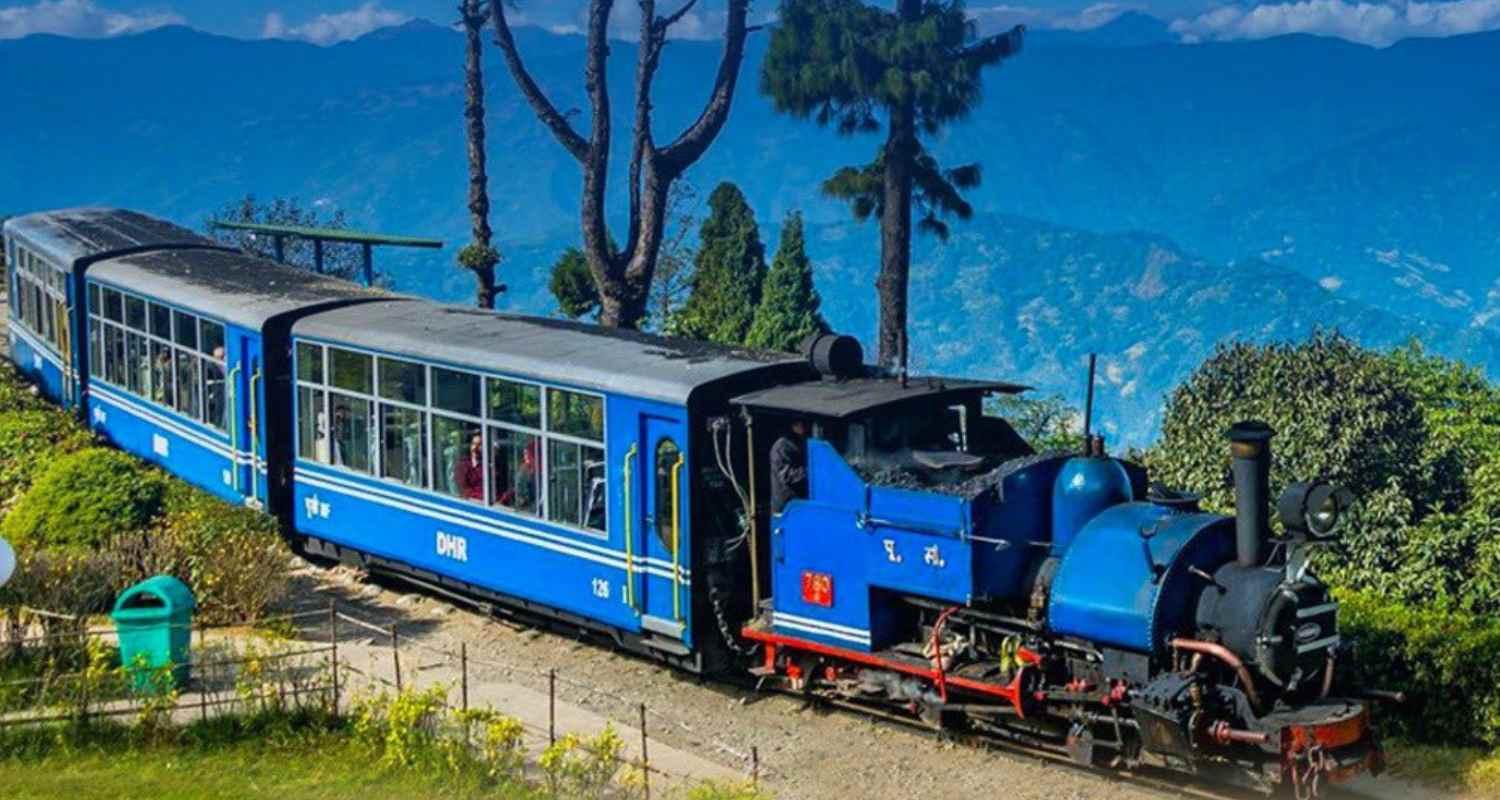
The mountain winds of Darjeeling have always carried stories—of steam, solitude, and slow journeys. Now, those stories are being rewritten with a fresh pulse. The legendary Darjeeling Himalayan Railway (DHR), a 145-year-old engineering marvel and a designated UNESCO World Heritage Site, is preparing to unveil three immersive chartered toy train experiences that promise far more than a nostalgic ride.
These newly curated journeys—part theatre, part wilderness expedition, part cultural immersion—seek to transform the quaint toy train from a passive sightseeing vehicle into a living, breathing storyteller of the Eastern Himalayas.
Perhaps the most evocative of the trio is the ‘Maharani Great Escape,’ a service steeped in colonial intrigue. Inspired by a real episode from 1920, it recreates the dramatic midnight departure of Maharani Indira Devi of Cooch Behar, who discreetly fled the hills aboard a toy train after attending a function at the iconic Windamere Hotel.
Beginning at 5:30 pm from Darjeeling, this luxurious chartered journey unfolds beneath the silver glow of the full moon. The train meanders through shadowy forests and silent tea gardens, pausing at the historic Tindharia workshop. The journey concludes at Gulma via Sukna, where folk dances, indigenous music, and traditional hill cuisine await beneath the open sky.
On fortunate nights, passengers may even witness tea leaves being plucked under moonlight—a scene as poetic as it is rare.
In an unprecedented collaboration with the forest authorities, DHR is introducing the ‘Bagheera Jungle Trail,’ blending rail heritage with ecological exploration. Conducted jointly with the Kurseong Forest Division, this experience begins with a trek through dense pine forests near Kurseong.
Guided by forest officials, visitors will traverse mist-laden trails, explore orchid habitats, visit century-old monasteries, and take in panoramic views from Heaven View Point. The journey then transitions onto the toy train itself, carrying passengers through serpentine tracks to Giddhapahar, home to the historic Netaji Museum, before returning through emerald valleys and forest corridors.
The third offering, the ‘Tea Timber Trail,’ celebrates the elemental lifeblood of Darjeeling—its tea and forests. Running between Sukna and Tindharia, the train halts at heritage tea estates where visitors can observe the delicate choreography of tea plucking, explore processing factories, and savour freshly brewed Darjeeling tea at its source.
Local villagers and Gorkha communities will showcase traditional handicrafts, cuisine, and cultural performances, allowing travellers to engage intimately with the region’s living heritage rather than merely observing it.
DHR Director Rishab Chowdhury described the initiative as a conscious shift toward experiential tourism. “Our objective is not merely to transport tourists, but to immerse them in the cultural, ecological, and historical fabric of the hills,” he said, adding, “These journeys will allow visitors to connect with forests, tea gardens, tribal traditions, and the enduring legacy of the toy train itself.”
Forest officials, too, view the collaboration as a milestone in sustainable tourism, ensuring both environmental preservation and meaningful visitor engagement.
The Darjeeling toy train’s story began in 1879, when construction commenced to link the plains of Siliguri with the Himalayan heights. On July 4, 1881, the first commercial train completed the ascent, forever altering the geography—and imagination—of the region.

 Follow us