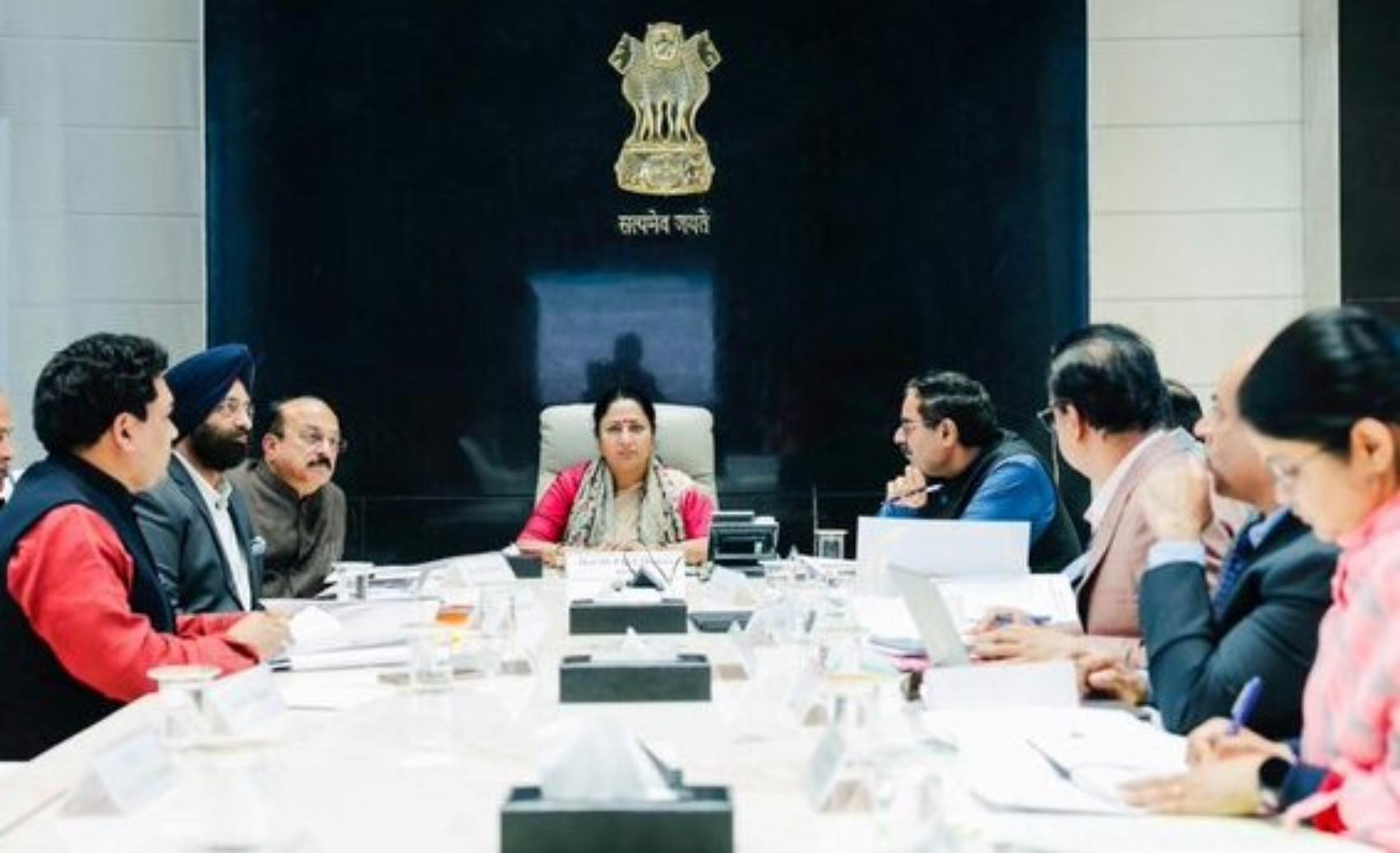
The government of New Delhi has approved a Carbon Credit Monetisation Framework that will allow the national capital to generate revenue by converting greenhouse gas emission reductions from its climate and pollution-control initiatives into tradable carbon credits. At the cabinet meeting held at the Delhi secretariat, ministers cleared the Carbon Credit Monetisation Framework policy on Tuesday.
The officials said Delhi Cabinet has approved a “carbon credit monetisation framework” designed to generate revenue for environmental initiatives by converting the city’s emission reductions into tradable financial assets. The move, officials said, aims to create a new funding stream for climate action without imposing additional costs on the state treasury.
Under the framework, Delhi will measure and certify greenhouse gas reductions achieved through existing green projects – such as its expanding fleet of electric buses, large-scale tree plantation drives, solar energy adoption, and improved waste management systems. These verified reductions will be converted into carbon credits and sold on domestic and international carbon markets.
The proceeds will be deposited directly into a new consolidated fund that will be created for development and environmental initiatives. Chief minister Rekha Gupta said, “This initiative reflects Delhi’s strong commitment to combating climate change while unlocking new financial pathways for sustainable development. Delhi will emerge as a leading state in harnessing the carbon market.”
A carbon credit represents one tonne of carbon dioxide (or its equivalent in other greenhouse gases) prevented from entering the atmosphere. Revenue for a so-called “carbon market” is generated when a project verifiably reduces emissions below a threshold. These credits are then sold on the markets to corporations or governments seeking to offset their own unavoidable emissions, thus creating a financial incentive for emission reductions.
Delhi’s model, officials said, is designed as a “zero-financial-liability” framework, where expert agencies will be paid a success fee only after revenue is realised, ensuring no upfront expenditure by the government.Environment minister Manjinder Singh Sirsa said the framework would allow Delhi to monetise emission reductions from initiatives like electric mobility expansion, urban forestry, Yamuna rejuvenation, and waste-to-energy plants.
“Delhi is already undertaking large-scale environmental transformation. This framework allows us to quantify emission reductions and monetise them. The revenue will be reinvested into pollution control and climate resilience,” Sirsa said.The government plans to establish a robust monitoring, reporting, and verification system to meet international audit standards. Credits may be registered under global platforms like VERRA and Gold Standard, or through India’s own emerging carbon market.

 Follow us