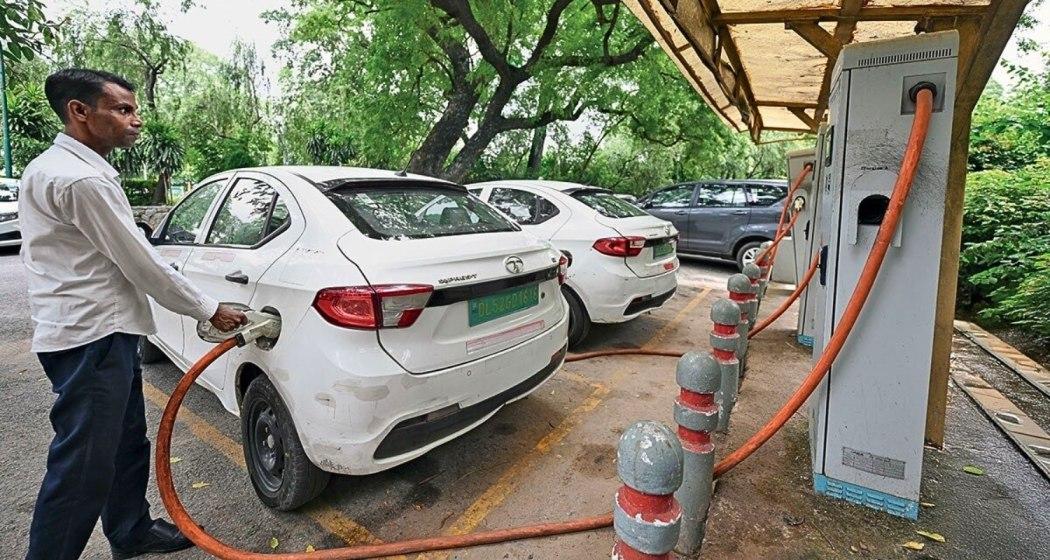
Delhi will expand its electric vehicle (EV) charging network from the existing 9,000 charging points to 32,000 by 2030 under its new Electric Vehicle Policy, Chief Minister Rekha Gupta said on Thursday, assuring residents that charging infrastructure would be ready to support the capital's transition to electric mobility.
CM Gupta said the government had spent nearly a year preparing the policy in consultation with original equipment manufacturers (OEMs), power distribution companies, housing societies and other stakeholders.
"We are ready for that. I want to assure Delhi citizens that they will not face any hurdles in charging EVs," she said.
The Chief Minister said the government had already identified land for the proposed charging stations despite the city's complex land ownership involving multiple agencies.
To accelerate the rollout, Delhi has introduced a single-window clearance mechanism for setting up charging stations. Delhi Transco Limited (DTL) has been designated as the nodal agency to oversee implementation, while power distribution companies and housing societies will also help develop charging infrastructure.
Also read: AI-driven safety on e-highway: Netradyne, NHEV tie up
Gupta said the policy extends beyond vehicle adoption to cover battery recycling, e-waste management and strengthening the electricity grid to meet rising demand as EV usage grows.
The Cabinet-approved policy also includes financial incentives worth around Rs 7,000 crore, forming part of a broader support package estimated at nearly Rs 15,000 crore. Buyers of electric two-wheelers will be eligible for subsidies of up to Rs 30,000, while those scrapping old vehicles can receive an additional incentive of up to Rs 10,000. Electric vehicles priced up to Rs 30 lakh will be exempt from road tax and registration fees.
The policy mandates that only electric autorickshaws will be registered in Delhi from January 1, 2027, while registration of new petrol and CNG-powered two-wheelers will cease from April 1, 2028.
Gupta said incentives have also been announced for heavy electric trucks, with the first 1,000 N2-category electric trucks receiving permission for round-the-clock entry into Delhi.
The policy will now be sent to Lieutenant Governor Taranjit Singh Sandhu for approval before it comes into force. It is scheduled to remain in effect until March 31, 2030.

 Follow us