Buxa Hills, nestled deep inside the Buxa Tiger Reserve along the India–Bhutan border, doesn’t just test endurance— it redefines what it means to conduct an election.
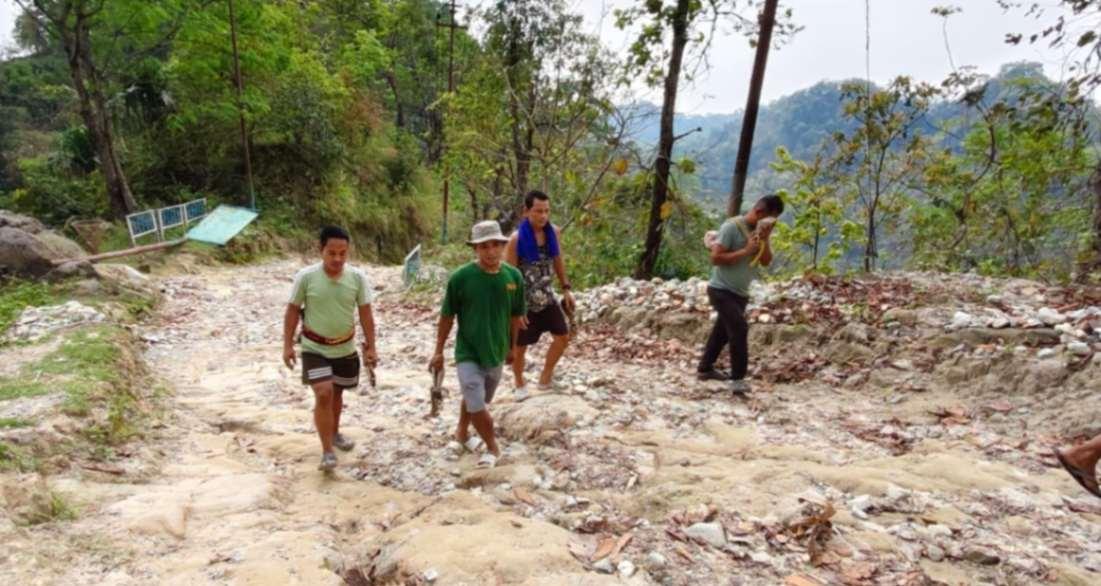
Perched at around 2,800 feet above sea level in the Kalchini Assembly constituency, this remote terrain is home to three of the country’s most inaccessible polling stations — Adma, Chunabhati and Buxa. There are no roads. No vehicles. Not even a flicker of mobile network.
Yet, when democracy calls, it arrives here on foot.
Election officials begin their journey from Alipurduar by vehicle, but only up to Santalabari. Beyond that, it’s a steep trek through rugged forest trails — hours of climbing, carrying polling materials on their backs, to reach booths tucked away in the hills.
Technology, too, struggles to keep up.
With zero network coverage, live webcasting — mandated by the Election Commission of India — remains nearly impossible. Instead, authorities are relying on continuous video recording and RTC satellite phones to track polling progress and ensure the safety of officials. Even voter turnout updates are relayed through these satellite links.
Around 1,100 voters from scattered hamlets like Sadar Bazar, Daragaon, Tasigaon, Adma and Lepchakha will cast their votes at makeshift polling stations set up in schools such as Buxa Duar BFP School and Adma Forest Basti Primary School.
But for the people who live here, the real journey is not about voting— it’s about surviving.
There are no hospitals in the hills. When someone falls sick — or when a woman goes into labour — families must carry them down treacherous mountain paths on makeshift stretchers for kilometres to reach the plains.
“Those who don’t have at least four people at home can’t even carry a patient,” says local resident Anit Thapa. “A JCB once came to build a road, but the Forest Department took it away. Where were the leaders then?”
The demand is simple. A road.
Yet, like many promises that echo through election seasons, it has remained just that— a promise.
“We will vote,” says Naseeb Lepcha quietly. “But whether they build the road or not— that’s in God’s hands now.”
For Manoj Lepcha, the frustration runs deeper. “There’s a school, but no teachers. No network. No road. Every election, people come, make promises—and then disappear.”
Back in the district headquarters, officials are grappling with their own challenge. Ensuring 100 per cent webcasting across polling stations, as directed by the Election Commission, is proving difficult in a district where connectivity itself is a luxury.
Out of 53 polling stations in Alipurduar facing network issues, 22 fall within Kalchini—three of them in Buxa Hills.
District Magistrate Mayuri Basu says efforts are underway. Meetings have been held with telecom providers. Plans are being drawn.
But up in Buxa, where signals don’t reach and roads don’t exist, people aren’t waiting for plans anymore. They’ve learned to walk—whether it’s for healthcare, for survival, or for democracy itself.
And so, in these hills, elections don’t arrive with loudspeakers or digital campaigns. They arrive quietly, step by step, on a narrow mountain trail.
Also read: Mamata responsible for BJP’s growth in Bengal: Rahul targets TMC

 Follow us