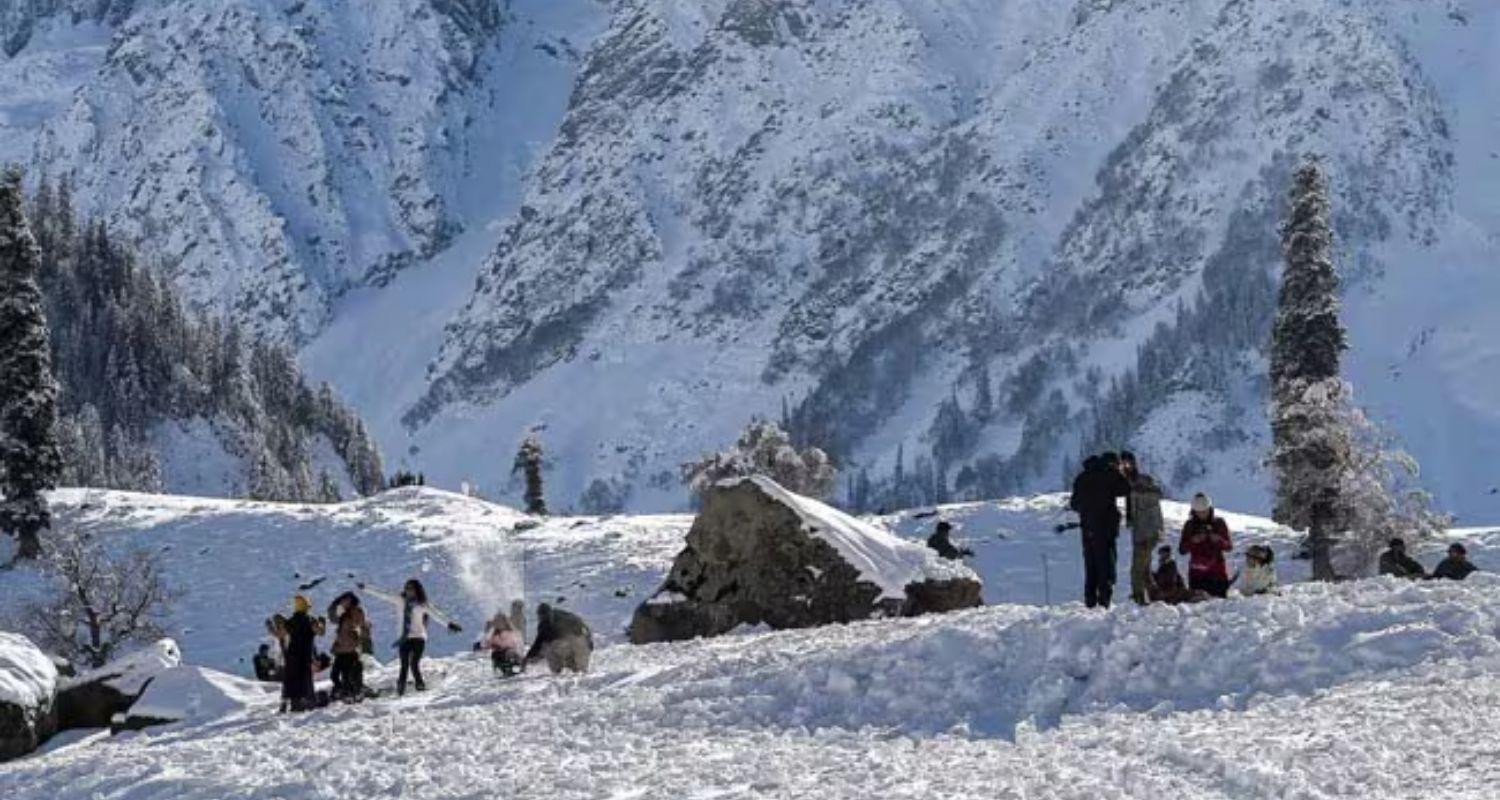
As Ladakh enters the coldest phase of the season, minimum temperatures across the UT have plunged several degrees below freezing point, with the MeT Department predicting more intense and harsh weather conditions to persist over the next few weeks.
Ladakh, a part of the former state of Jammu and Kashmir, has remained the coldest region in the country, with a bone-chilling cold wave sweeping across the desert-like region.
Drass emerged as the coldest place in the UT, where temperatures fell to minus 24.7 degrees Celsius on Wednesday night.
Similar conditions were reported in Nyoma, where temperatures plunged to minus 20.1 degrees Celsius, followed by Padum at minus 17.2 degrees Celsius. The temperatures at Hanle, home to the Indian Astronomical Observatory (one of the world's highest sites for optical, infrared and gamma-ray telescopes), recorded minus 16.9 degrees Celsius.
The capital city, Leh, also experienced freezing cold wave conditions as temperatures fell to minus 14.6 degrees Celsius. Other parts, including Tangste, recorded minus 17.8 degrees Celsius, and Upshi recorded minus 15.7 degrees Celsius, while minimum temperatures in Kargil recorded minus 13.4 degrees Celsius.
Meteorological officials said the cold wave conditions are typical of the peak winter phase and urged people to take precautions, especially during nighttime and early morning hours.
Leh received fresh snowfall on January 5, leading to several flight cancellations by the country's leading airline, IndiGo, due to poor visibility and adverse weather conditions.
Ladakh's climate is characterised by a high-altitude cold desert environment, with summer temperatures occasionally reaching up to 35 degrees Celsius, while winter lows can drop to around minus 30 degrees Celsius or below in places like Drass, often accompanied by minimal precipitation and strong winds.
Also Read: Cold wave intensifies in Valley; flights suspended at Leh Airport

 Follow us