
Trending:
From Yunnan to the Brahmaputra Valley: The emergence of the Ahoms
Tracing their journey from Yunnan to the fertile Brahmaputra Valley, the Ahoms combined diplomacy, military skill, and cultural adaptability to establish a kingdom that lasted nearly 600 years. Their governance, festivals, and resilience continue to influence Assam’s social fabric and identity today. Follow us
News Arena Network - Guwahati - UPDATED: March 12, 2026, 04:14 PM - 2 min read
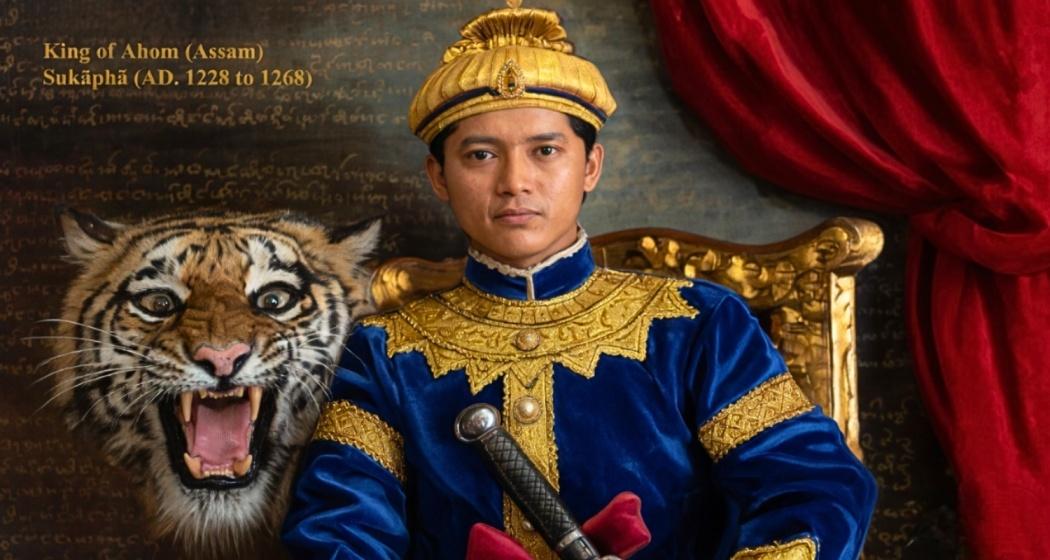
AI-generated depiction of Chaolung Sukaphaa, the first Ahom king who led his followers from Yunnan into the Brahmaputra Valley in 1228, laying the foundation of a kingdom that shaped Assam for centuries.
The history of Northeast India is an intricate tapestry woven from myriad cultures, from the Bodo‑Kachari and Dimasa societies to the ethnic mosaic of Tibeto‑Burman, Austro‑asiatic and Indo‑Aryan traditions that met along the Brahmaputra’s fertile landscapes. Into this complexity came a migratory group whose legacy would shape the region for centuries -- The Ahoms.
In 1228, Tai prince Chaolung Sukhaphaa and his band of followers crossed the Patkai Hills into the Brahmaputra Valley, not as conquerors but as settlers seeking fertile lands and fresh beginnings. Their unique blend of integration with indigenous tribes, administrative sophistication and cultural adaptation anchored them firmly in the region’s unfolding history, forging a distinct Assamese identity that resonates even today.
Journey from the hills of Yunnan to the plains of the Brahmaputra
The Ahoms’ story begins far from Assam’s plains. Sukaphaa was a Tai prince from Mong Mao, an area on the frontier of present‑day Yunnan (China) and northern Myanmar. Around the early 1200s, he led an estimated 9,000 followers, families, nobles and warriors across the Patkai mountain passes into the fertile valley below. Their intent was not empire‑building, but settlement, to harness the waters of the Brahmaputra and cultivate rice.
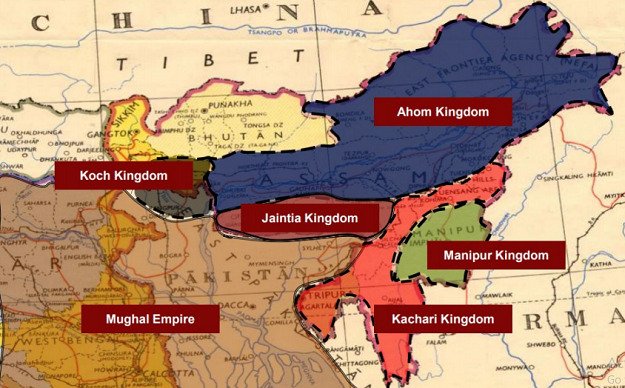
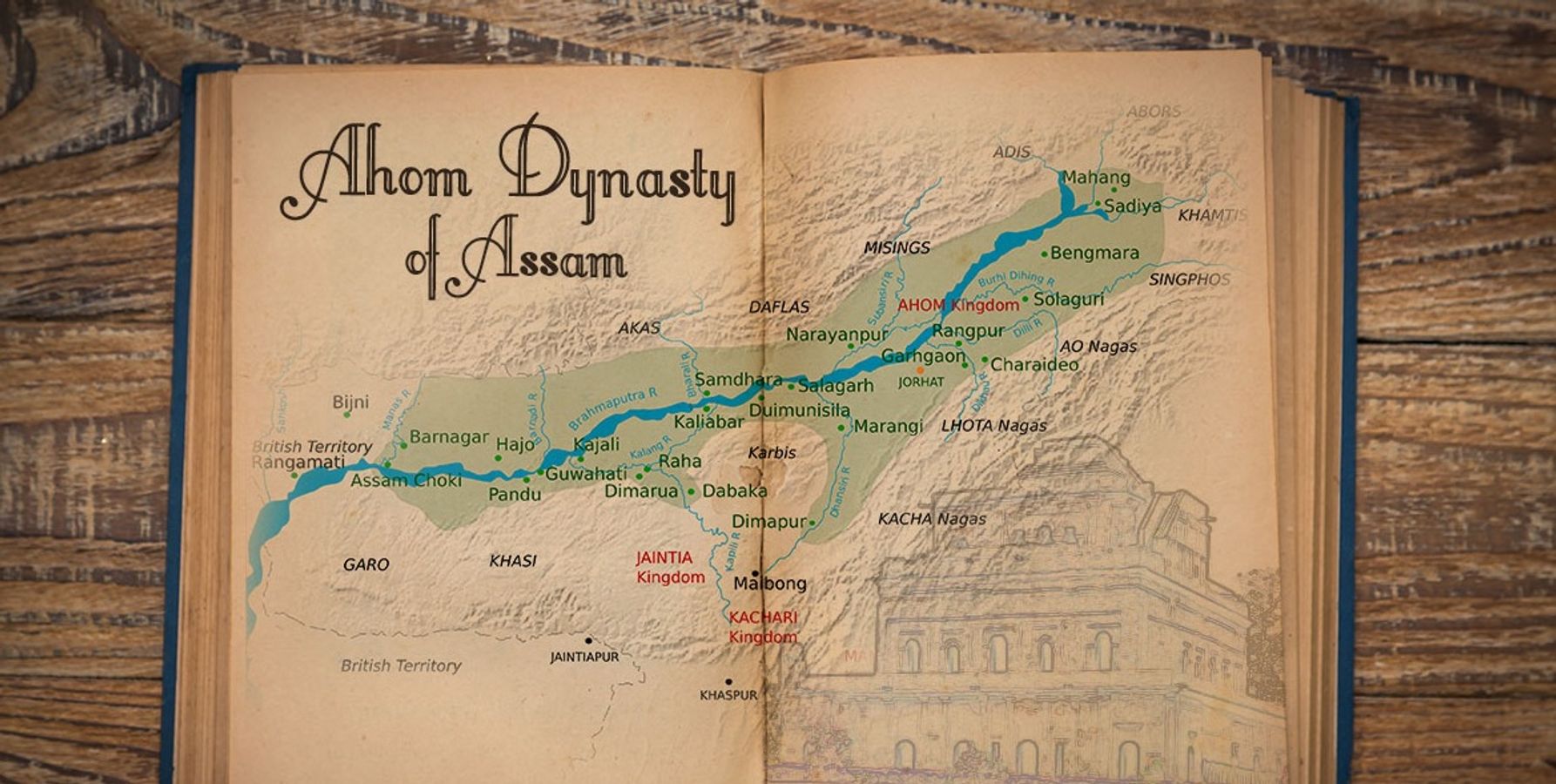
Sukaphaa carried knowledge of wet‑rice agriculture, irrigation, and social organisation that he adapted to the valley’s needs. As his group moved westward, they encountered communities such as the Morans, Borahis and Chutias. Instead of confrontation, Sukaphaa pursued cooperation, forging marital ties, recognising local chieftains and building alliances that would become the bedrock of his polity.
Ranjit Phukan, a descendant of an Ahom noble family based in Sibsagar, still reflects on this founding philosophy, “Our forefathers did not overpower this land, they joined it. In old village tales, we are told that Sukaphaa spoke of honouring rivers as much as warriors. That guided how they lived and how they ruled.”
Over time, this integration fused the newcomers with indigenous groups into a growing polity. The first capital at Charaideo, chosen for its strategic elevation and fertile surroundings, became the symbolic heart of the Ahom realm. Today its maidams (burial mounds) stand like silent pyramids, testifying to a civilisation rooted in reverence and continuity. Recently recognised as a UNESCO World Heritage site, these structures remind visitors of a past that was both tangible and spiritual.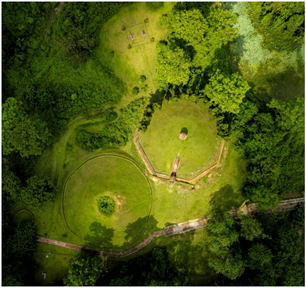
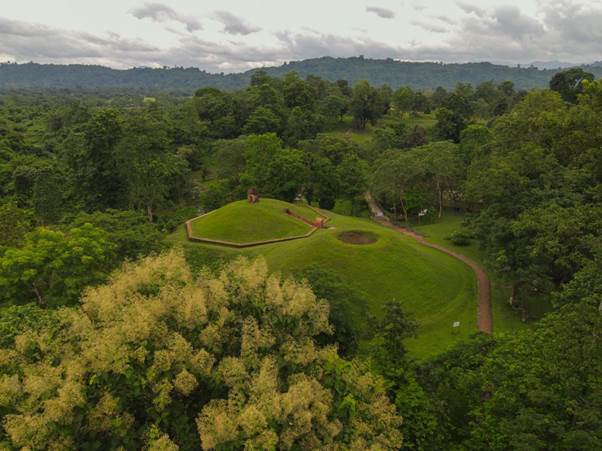
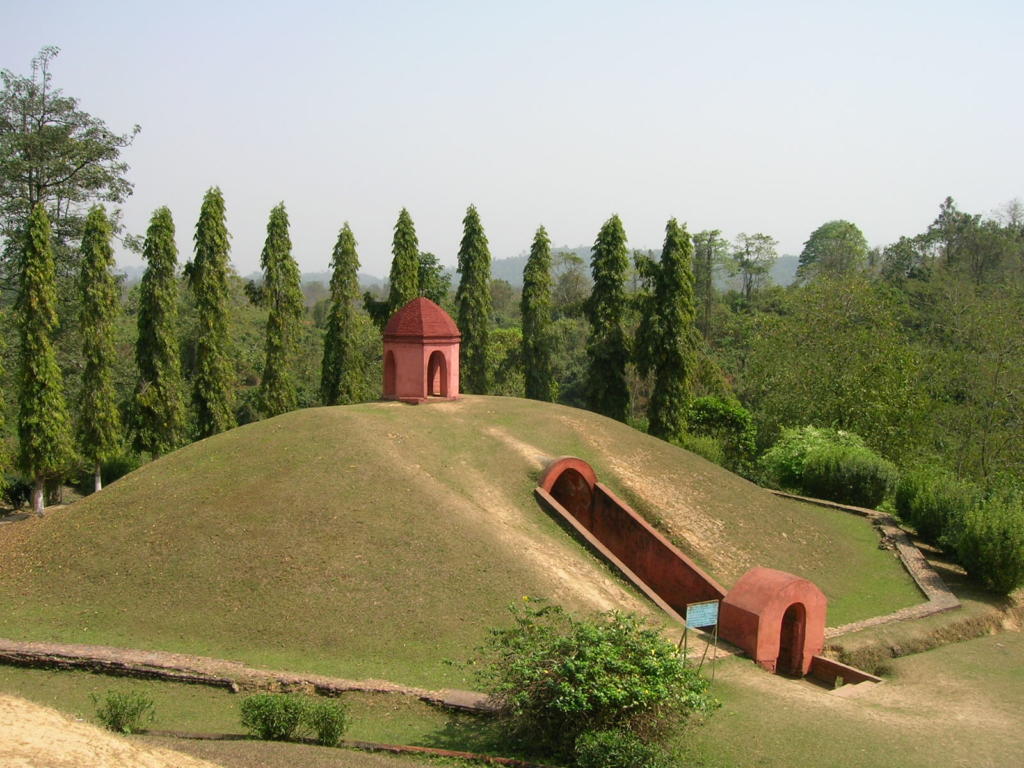
Maidam of Ahom Kings at Charaideo in Sivasagar
Life, labour and trade the Ahom Way
Society in the Ahom Kingdom developed along distinct lines. Central to its organisation was the Paik system, a rotating labour system where men aged 15 to 50 contributed to agriculture, construction, or military service. This not only ensured steady labour for infrastructure projects but fostered a sense of shared purpose across ethnic groups.
Agriculture was the lifeblood of the Ahom economy. The rulers expanded wet‑rice cultivation through canals, embankments and seasonal tanks, stabilising food production and enabling surplus trade. Fields of rice, pulses and vegetables fed towns and villages, while cottage industries such as weaving, metalwork and pottery supported daily life. Roads, bridges, and irrigation systems enabled surplus production and facilitated commerce along ancient trade routes connecting Assam to Bengal and Southeast Asia.
Among crafts, Assamese silk weaving emerged as a defining cultural art, muga and eri silks became prized not just locally but in trade exchanges. These textiles, their golden sheen and soft texture, remain symbols of Assamese identity today.

Dr Priyanka Baruah, whose family has preserved traditional weaving skills for generations, explains: “When I wear muga in festivals, I feel connected to histories I didn’t learn in school. The threads carry stories, of fields, rivers, ancestors and their hands.”
Trade grew alongside agriculture and crafts. Weekly haats (markets) dotted rural and urban centres where rice, silks, forest goods and livestock circulated.
Coins were introduced gradually, by the seventeenth century coins bearing Chinese characters facilitated commerce with Tibet and other Himalayan regions, linking Assam to broader trade networks.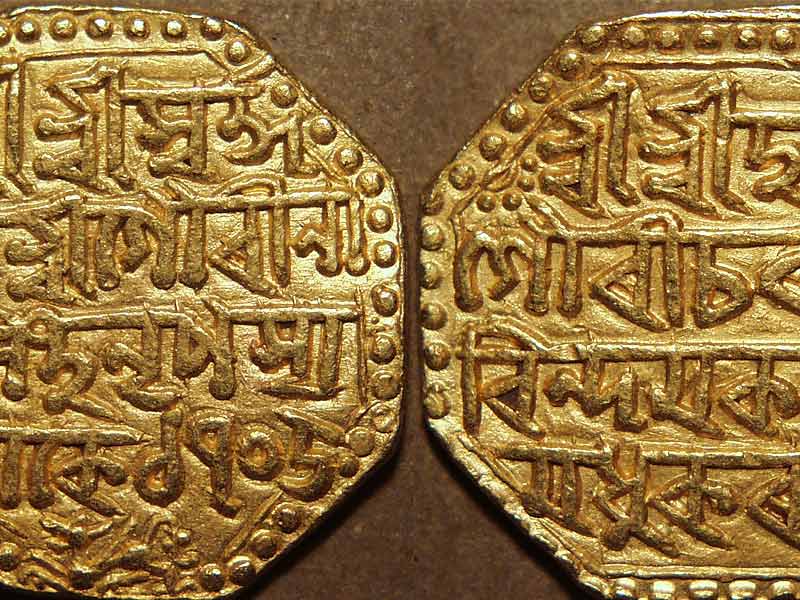
Ahom governance, warfare and cultural synthesis
The Ahom state developed nuanced governance, blending central authority with regional flexibility. Councils of nobles, the Burhagohain, Borgohain, and Borpatrogohain, advised the king, or Swargadeo, while the Patra system distributed power among noble houses, ensuring no single faction dominated. The Patra Mantras, a council of ministers, guided decisions on military, economic, and diplomatic matters, allowing diverse ethnic groups to retain local practices within a unified administrative framework.
Their military strategies were equally innovative. The Ahoms maintained disciplined armies and mastered war elephants, which gave them a decisive advantage against local tribes, including the Naga, known for their guerrilla tactics. Sukaphaa combined diplomacy with military might, gradually securing dominance over the valley.
The Ahoms’ military acumen was tested repeatedly, most famously against the Mughal Empire. By the 17th century, the Mughals sought control over Assam as they expanded eastward. Initial invasions led by generals like Mir Jumla and Ram Singh met fierce resistance. The Ahoms leveraged their knowledge of rivers, monsoon weather, and terrain to launch guerrilla-style attacks, disrupting Mughal supply lines and reclaiming lost territory.
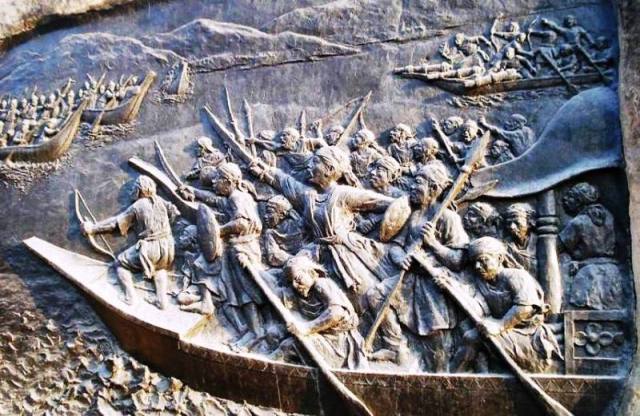
The Battle of Saraighat (1671) exemplifies their ingenuity. Led by General Lachit Borphukan, the Ahoms, though outnumbered, used small manoeuvrable boats, fire arrows, and strategic river ambushes to decisively defeat the Mughal fleet. This victory not only preserved the kingdom’s sovereignty but became a symbol of Assamese pride and resilience.
Ahom descendant Kanaklata Borgohain notes, “Our ancestors valued both strength and diplomacy. The Ahoms never saw the valley as conquered territory alone; it was a place to coexist and build a sustainable society.”
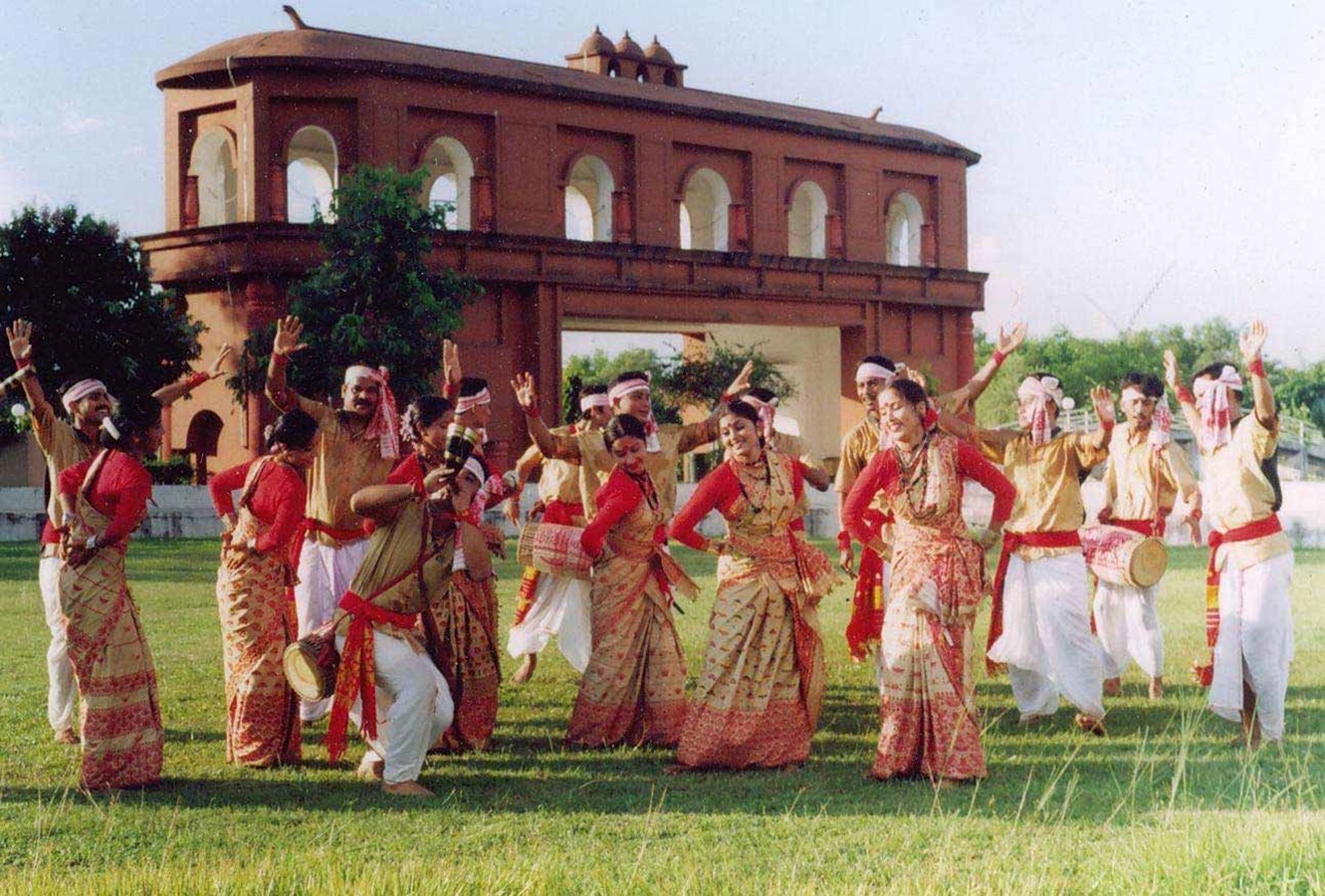
Initially followers of Pralung, an ancestor-worshipping animist faith, the Ahoms gradually embraced Hinduism under the influence of local populations. Festivals like Bihu, originally tied to agrarian cycles and ancestor worship, absorbed elements of Hindu rituals, forming the vibrant celebrations still observed in Assam today.
Descendant Dr. Jyoti Phukan explains: “The Ahoms were never rigid. Their ability to adapt culturally while preserving core traditions is why modern Assamese society still resonates with their heritage, from our festivals to our governance systems.”
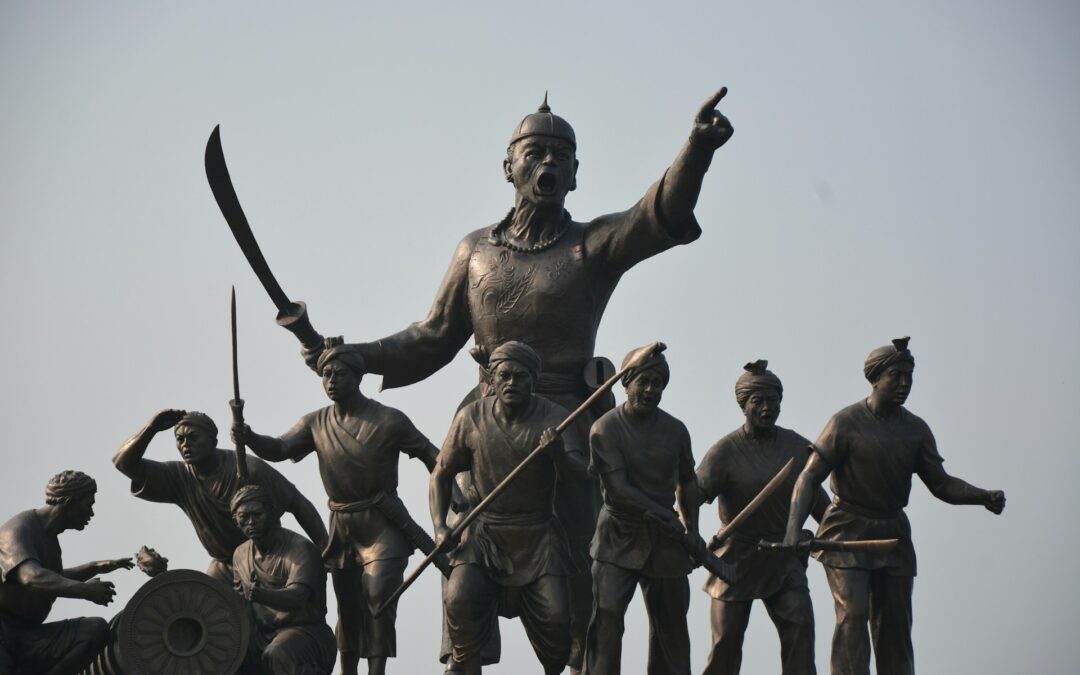 Statue of Lachit Borphukan (in the middle) at Sivasagar with other Ahom Warriors
Ahom influence in modern Assam
The Ahoms’ influence is not confined to old chronicles, it lives in the rhythms of contemporary Assamese culture. Festivals such as Bohag Bihu incorporate agricultural rituals rooted in paiks’ cycles of sowing and harvest. The ancestral festival Me‑Dam‑Me‑Phi, devoted to reverence of forebears, continues to be observed across communities irrespective of caste or creed.
Assamese cuisine, too, bears their imprint: rice remains central at every meal, and fermented delicacies reflect preservation techniques long practised in Ahom villages. Even naming patterns, with surnames like Phukan, Barua, Gohain, Borgohain, reflect administrative titles from the Ahom era.
Dr Anupama Singha, an Assamese cultural researcher, remarks, “The Ahom influence is baked into the daily, language, meals, markets, festivals. We might not speak Tai Ahom as a daily language now, but the structures they placed into society live on.”
Urban Assamese life often reflects this blending. Tea gardens, markets and riverfront festivals draw on a shared sense of place that bridges tribal, Ahom and later colonial influences. Music and dance too carry rhythms that trace their roots to folk forms patronised by Ahom courts and villages alike.
The end of rule and a new landscape
Between 1817 and 1826, the kingdom’s fate began to shift. With internal strife unresolved, Ahom leaders sought external help against rival uprisings. This invitation brought Burmese troops into Assam, initially as allies, but later as occupiers. Their presence devastated agricultural infrastructure and unsettled communities.
The conflict between Burma and the British East India Company culminated in the Treaty of Yandabo (1826), which ended Burmese claims and marked the beginning of British colonial administration in Assam. This treaty effectively dissolved Ahom political sovereignty and introduced a new political order.
Yet, even in decline, the social and cultural foundations remained. Many former nobles took up roles as village leaders, teachers or traders. The Ahom chronicles (Buranjis), written records of administration, diplomacy and events, became valuable sources for historians during colonial scholarship, and later for Assamese writers reclaiming their past.
A legacy beyond kingdoms
The Ahom Kingdom was not merely a political entity that rose and fell over six centuries. It was a society that harmonised diversity, merging Tai traditions with indigenous cultures, combining agrarian innovation with craft excellence, and embedding its ethos into the social fabric of Assam. From festivals and cuisine to textiles and surnames, the Ahom legacy continues in the lived experience of millions.
As Ranjit Phukan once put it, “Our identity was never given, it was cultivated, like our rice fields, over seasons, through seasons.”
The Ahom kingdom’s story is a reminder that history lives not just in archives and monuments, but in the everyday languages, foods and festivals of people who carry that past forward into the present.
Also read: Assam's 'Moidams' earn UNESCO World Heritage status
