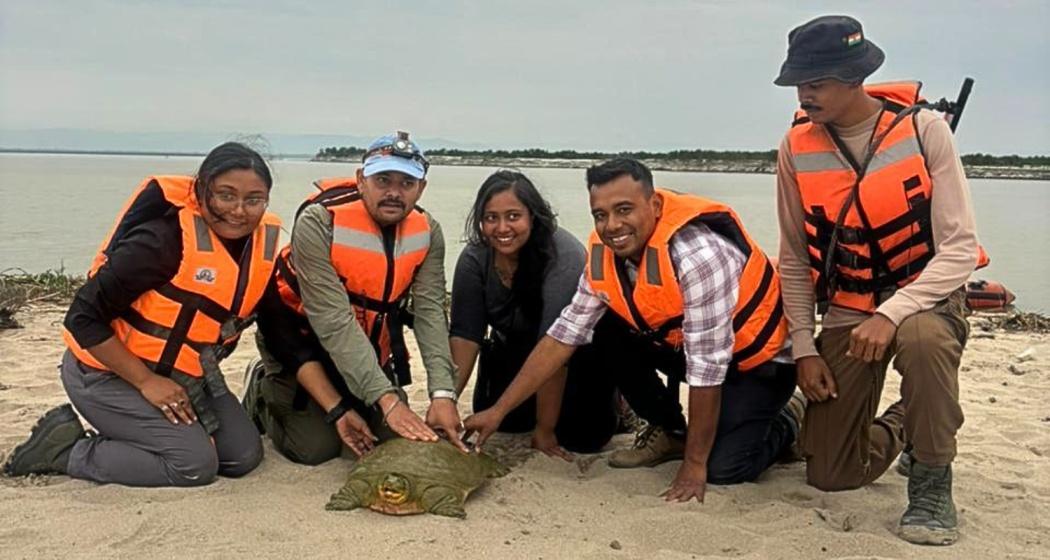
The country’s first satellite-tagged Ganges softshell turtle was released in Assam’s Kaziranga National Park on Friday, marking a significant milestone in India’s freshwater conservation efforts.
The release coincided with Endangered Species Day, Assam Chief Minister Himanta Biswa Sarma said in a post on X.
“A first for India at Kaziranga! Marking #EndangeredSpeciesDay, the country’s 1st satellite-tagged Ganges softshell turtle was released in @kaziranga_, a major step for wildlife conservation,” Sarma said.
“A proud moment for Assam as we continue to protect every species that calls our forests home,” he added.
Forest officials said the satellite tag would help researchers monitor the turtle’s movement, habitat use, migration patterns and survival behaviour in the wild. Conservationists believe the technology will generate valuable scientific data for long-term protection of the species, which faces increasing threats from habitat degradation, river pollution, sand mining and illegal hunting.
Also read: Olive Ridleys skip Gahirmatha nesting, experts concerned
The Ganges softshell turtle is a freshwater reptile found mainly in the Ganga, Indus and Mahanadi river systems across northern and eastern India. The species is protected under Part II of Schedule I of the Wildlife (Protection) Act, 1972, making its hunting, trade or possession a punishable offence.
Kaziranga, globally known for its one-horned rhinoceros conservation programme, has in recent years expanded its focus to include lesser-known and endangered aquatic and reptile species. The national park and adjoining river ecosystems support a wide range of turtles, dolphins and wetland birds.
Wildlife experts said freshwater turtles in India have witnessed a steady decline due to shrinking river habitats, accidental fishing-net entanglement and illegal wildlife trade. Several species are also threatened by changing river flows and climate-related disruptions.
Assam authorities have undertaken multiple conservation drives in Kaziranga over the years, including habitat restoration, anti-poaching operations and scientific monitoring of endangered wildlife. Officials said the satellite-tagging initiative could pave the way for similar projects involving other threatened aquatic species in the region.

 Follow us