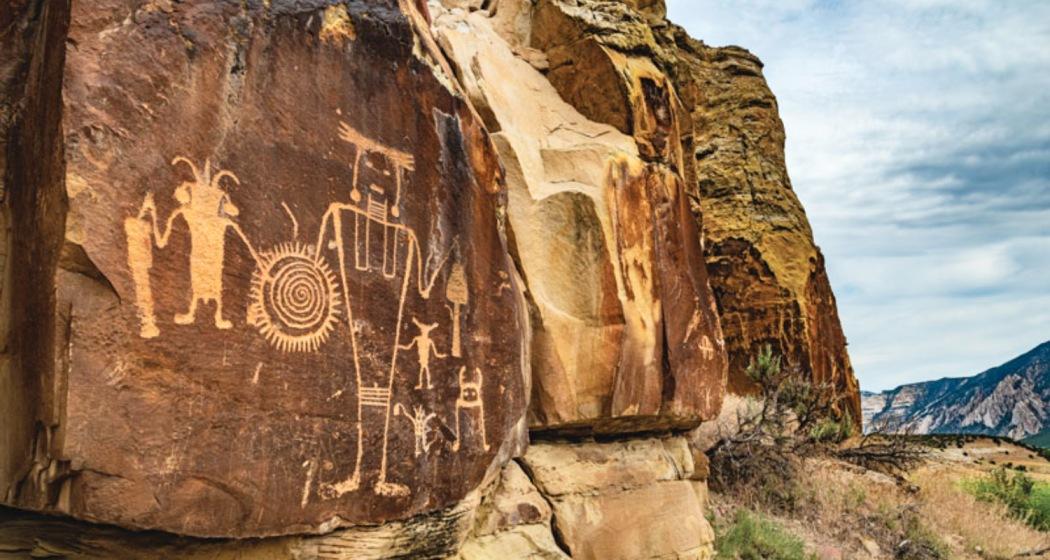
India’s first Petroglyph Conservation Park will be established on the banks of the Indus River in Ladakh to preserve ancient rock carvings facing threats from unregulated tourism, infrastructure development and lack of awareness, officials said on Saturday.
Lt Governor Vinai Kumar Saxena laid the foundation stone for the project on World Heritage Day, calling it a major step towards safeguarding the region’s prehistoric heritage. Petroglyphs are ancient images and symbols carved, etched or engraved on rock surfaces.
The proposed park will function as a dedicated conservation and display space for centuries-old rock art collected from vulnerable and isolated sites across Ladakh. Authorities said the initiative aims to protect these artefacts while also making them accessible to visitors through a curated educational setting.
A Memorandum of Understanding was signed between the Department of Archives, Archaeology and Museums and the Archaeological Survey of India (ASI) for joint conservation efforts.
Also read: ‘Oldest octopus’ fossil found to be misidentified
Officials said nearly 400 petroglyph sites have been identified across Ladakh, many of which are in clusters while several others exist in isolated locations along the Indus and Zanskar river basins. The isolated carvings are considered most at risk due to construction activity, road expansion and tourism pressure.
Some of the petroglyphs feature inscriptions in ancient Chinese, Arabic and Sanskrit, reflecting Ladakh’s long historical and cultural linkages. The carvings also depict hunting scenes, animals such as ibex and snow leopards, as well as Buddhist symbols like stupas, highlighting an evolution of cultural traditions over centuries.
Saxena said Ladakh is a “repository of ancient heritage” and stressed that conservation must be integrated into development planning. He noted that human activities such as blasting and road construction pose serious risks to these fragile rock inscriptions.
Calling the carvings “open-air museums” and “civilisations carved on stone”, he said the initiative will help preserve a continuous historical record from the Palaeolithic era to later periods.
The administration also plans to develop heritage circuits to regulate tourism and promote lesser-known archaeological sites. Authorities have called for community participation in safeguarding the region’s cultural assets for future generations.

 Follow us