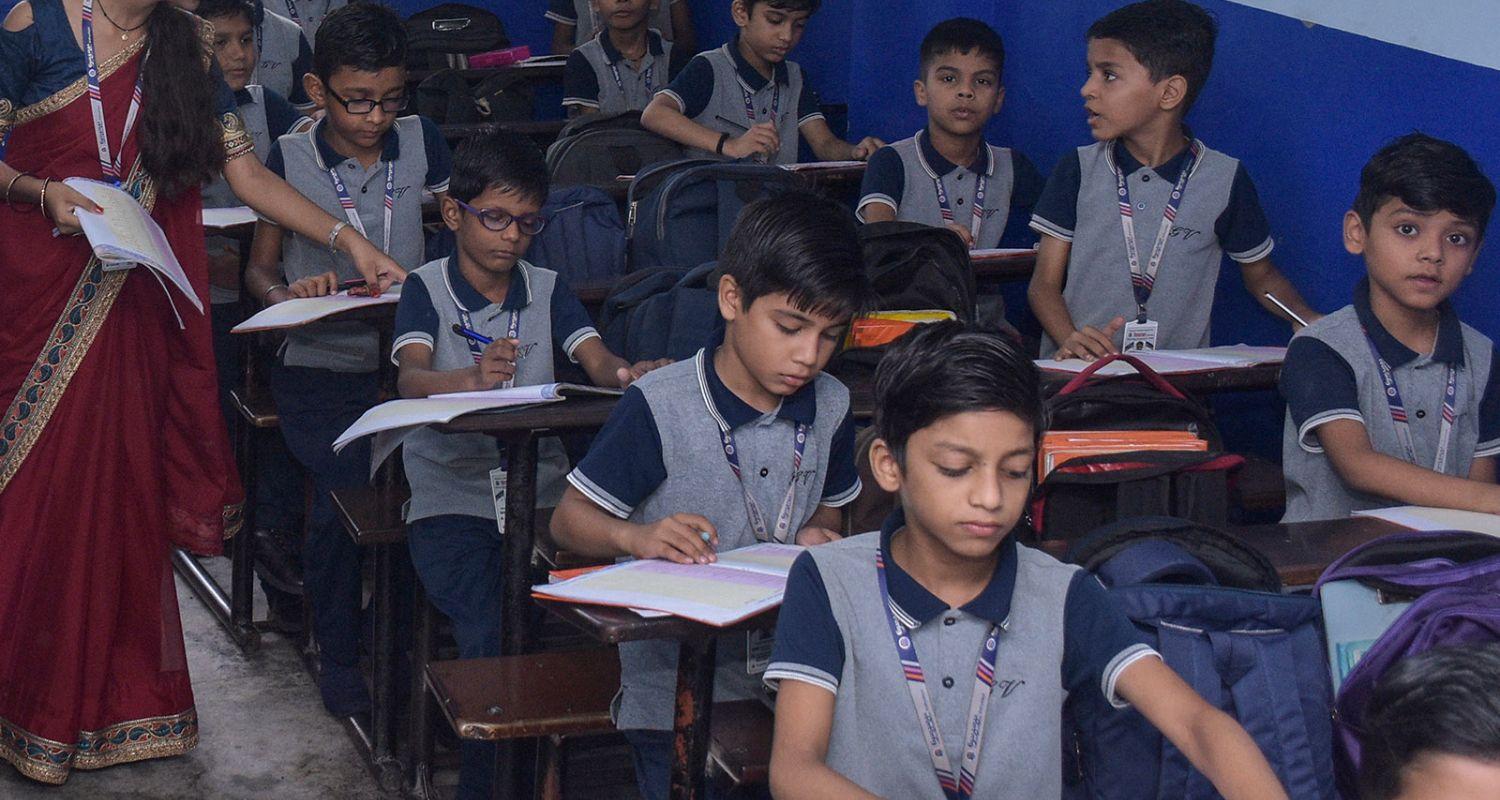
A sweeping infrastructure overhaul covering nearly 81,000 schools across the state is set to be rolled out, as the government announced an ambitious plan to transform the education system with support from impending central funds. The initiative, expected to take effect from August 1, was outlined after Chief Minister Suvendu Adhikari chaired a high-level meeting at Bikash Bhavan, the Education Department headquarters, on Monday.
Framing the reforms through the philosophy of Swami Vivekananda and the constitutional ideals of BR Ambedkar, the Chief Minister said the objective is to unlock the full potential of students through improved infrastructure and equitable access to education. He emphasised that education falls under the Concurrent List, making it a shared responsibility of both the Centre and the state.
According to him, central funds that had remained stalled due to policy differences with the previous state government are now expected to be released within a week, following the state’s decision to implement the National Education Policy (NEP).
Union Minister of State for Education Sukanta Majumdar, along with senior officials from Delhi, attended the meeting, while Union Education Minister Dharmendra Pradhan was scheduled to join virtually. The Chief Minister noted that the earlier government’s refusal to adopt the central education policy had resulted in the state missing out on crucial funding despite the Centre’s readiness to provide it.
As part of the reform package, the government plans to modernise school infrastructure extensively. Mid-day meals will now be prepared using gas instead of traditional wood or coal, while solar power systems will be introduced in a phased manner to promote eco-friendly energy use. Schools will be equipped with clean toilets and arsenic-free purified drinking water facilities, alongside
measures to ensure hygienic dining conditions for students. Special attention will be given to districts in the western region — Birbhum, Bardhaman, Bankura, Purulia, and Jhargram — where fans will be installed in schools that currently lack them to address extreme heat conditions. In a student-focused initiative, sanitary napkin vending machines will also be installed in girls’ schools as well as co-educational institutions and colleges.
Addressing concerns over stalled recruitment, the Chief Minister said the deadlock surrounding the OBC reservation issue is nearing resolution after recent developments in the Supreme Court. He stated that the matter was mentioned in court following the end of the summer vacation on July 8 and expressed confidence that the state would soon emerge from the legal complexities. Once cleared, around 6,000 candidates who have already completed their interviews will be appointed, while the recruitment process for the remaining 6,000 posts will be expedited.
In a move aimed at ensuring transparency, senior IAS officer Dushyant Nariala has been appointed chairman of the recruitment board. The government has asserted that the entire recruitment process will be conducted strictly on merit, adhering to reservation norms for SC, ST, OBC, EWS, and PH categories, with no political interference.
The government has also announced an enhancement in the nutritional quality of mid-day meals, increasing the per-student allocation in primary schools from Rs 6.78 to Rs 10. From August 1, ISKCON will oversee the cooking and distribution of mid-day meals in Kolkata and several other parts of the state, with additional financial support to ensure improved quality and nutrition.
Taking a firm stance on rising costs in private education, the administration has said it will conduct strict inspections of all private schools and universities operating with state-issued No Objection Certificates. Institutions will only have their approvals renewed if they comply with regulatory standards and maintain affordable fee structures. “We will not allow education to become a commodity under any circumstances,” the Chief Minister said.
In a parallel structural reform, the government is preparing to introduce legislation that will place parents in key positions within school managing committees, replacing political representatives. A bill to this effect is expected in the upcoming Assembly session, with officials stating that the move is intended to make the education system more accountable and transparent by shifting responsibility directly to students’ guardians.
Also read: Kolkata Police suspends two DCPs over social media comments

 Follow us