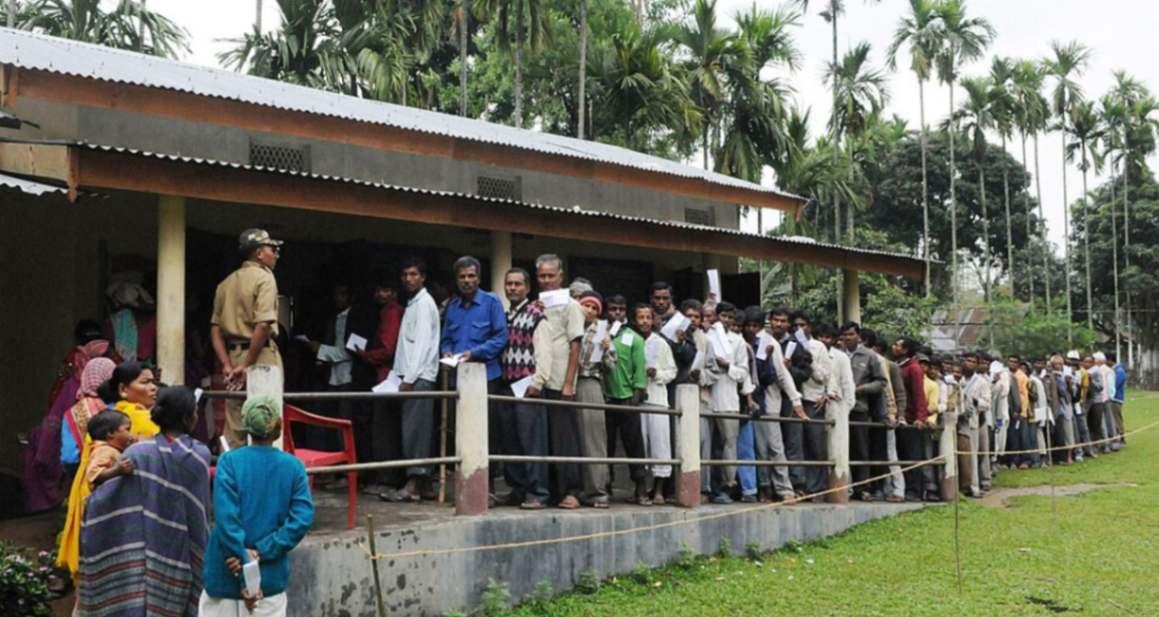
The Centre for North East India Security Studies (CNEISS), a security think tank, has warned that a possible alliance between insurgent groups operating across India, Bangladesh and Myanmar could attempt to disrupt the forthcoming Assam Assembly elections.
According to CNEISS, the United Liberation Front of Assam–Independent (ULFA-I), Bangladesh-based tribal armed group Parbattya Chattagram Jana Samhati Samiti (PCJSS), led by Jyotirindra Bodhipriyo Larma in the Chittagong Hill Tracts, along with Rohingya militant groups Arakan Rohingya Salvation Army (ARSA) and Rohingya Solidarity Organisation (RSO), may coordinate activities aimed at destabilising the region during the election period.
Swapan Debbarma, a representative of CNEISS, said sources indicated that officials from Bangladesh’s Directorate General of Forces Intelligence (DGFI) and Pakistan’s Inter-Services Intelligence (ISI) allegedly facilitated a two-day meeting between representatives of these groups in December 2025 at Cox’s Bazar.
“From December 9 to 11, 2025, the DGFI and Pakistan’s ISI reportedly organised a two-day marathon meeting among ARSA, RSO, ULFA(I) and the PCJSS (Santu) at Cox’s Bazar. Currently, arms are being supplied through Rohingya terror groups and the PCJSS representative at Cox’s Bazar,” Debbarma said.
He further alleged that a PCJSS leader had procured weapons intended for insurgent groups in the Northeast. “Bidhayak Chakma reportedly procured 50 sophisticated arms on February 26, 2026, for onward transfer to create disturbances in the Northeast. The PCJSS (Santu) has also reportedly been supplying rocket fuel procured from western agencies in Chittagong to insurgents in the region. Rocket fuels can be used to blow up bridges,” he added.
Security agencies in India have earlier arrested several alleged PCJSS cadres. Personnel of the Tripura Police and the Border Security Force reportedly arrested armed cadres, including Samaj Priyo Chakma, in Agartala on January 21, 2025, while 13 more cadres were apprehended in the city on June 4, 2025. Another suspected member, Apollo Chakma, was arrested on February 23, 2026.
The think tank also cited a ruling by the Gauhati High Court in September 2024 in the case of the National Investigation Agency (NIA) versus Rohmingliana. The case related to the seizure of a large cache of weapons from PCJSS cadres in Mizoram in 2013. According to CNEISS, the court described PCJSS as a terrorist organisation in its judgement.
Debbarma further argued that current security measures may be insufficient to counter emerging threats. He claimed that PCJSS has attempted to influence Chakma communities in India by providing funds amid grievances linked to the denial of citizenship to Chakmas in Arunachal Pradesh and alleged discrimination in Mizoram.
These tensions led to protests in Tripura in July and August 2025 after the Assam Rifles seized drugs worth Rs 10.43 crore from Sapna Chakma and Punyasur Chakma, who were described as close associates of PCJSS leader Bidhayak, on June 19, 2025.
Debbarma also claimed that PCJSS supreme commander Santu Larma, who has served as chairman of the Chittagong Hill Tracts Regional Council for more than two decades after signing the Chittagong Hill Tracts Accord, may face uncertainty under the current government in Bangladesh.
He further alleged that Gautam Kumar Chakma, a senior PCJSS leader and member of the regional council who entered India on a medical visa, had called arms commanders from the Chittagong Hill Tracts to Agartala.
Debbarma warned that such movements, coupled with reduced vigilance during the upcoming Holi festivities, could pose a serious security risk in the Northeast.
Also read: Assam oppn parties set to campaign jointly for Assembly elections

 Follow us