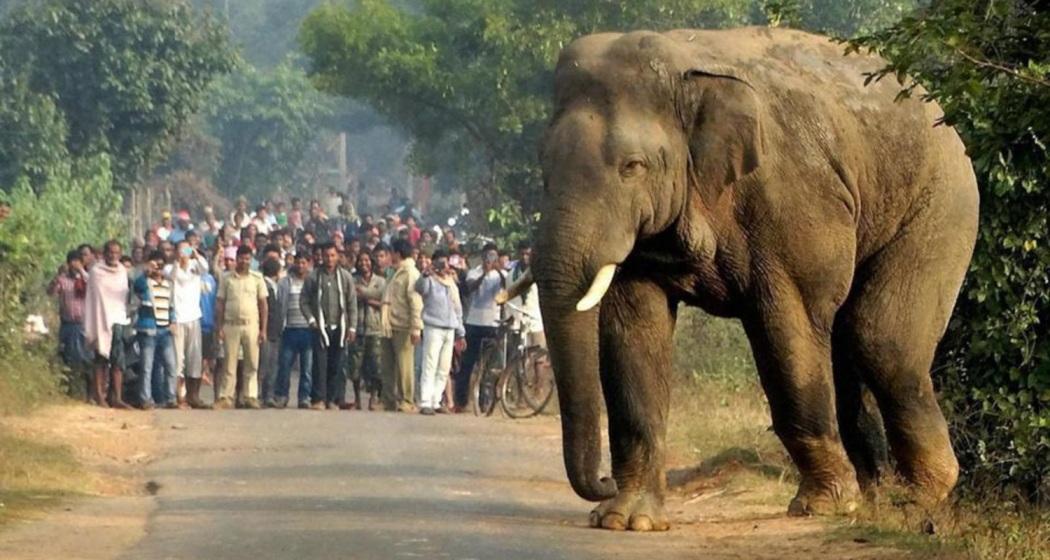
A 35-year-old man was trampled to death by a wild elephant in Jharkhand’s Ramgarh district on Friday, taking the toll from human-elephant conflict in the area to five in just three days.
The victim, identified as Loknath Munda, was attacked in the Karma Sugiya Khira Beda area. His death follows four fatalities reported on Thursday in the Ghatto OP area, where Amit Rajwar (33), Amul Mahto (35), Parvati Devi (40) and Savitri Devi (45) were killed in separate elephant attacks.
Forest officials said a large herd of around 42 elephants, moving in six to seven smaller groups, is roaming through the region, triggering panic among villagers and causing extensive damage to crops and property.
Ramgarh Divisional Forest Officer Nitish Kumar urged residents to remain alert and make use of the ‘Hamar Haathi’ mobile application, which provides alerts on elephant movement within a 10-km radius. He advised people to move to safer locations upon receiving alerts and cautioned against provoking the animals or attempting to take photographs or videos.
Also read: Elephant herd kills four in Jharkhand’s Ramgarh
Data from the forest department show that elephant attacks in Jharkhand have claimed more than 1,270 human lives over the past 18 years, while over 150 elephants have died due to electrocution, train accidents and improvised explosive device blasts. Between 2019 and 2024, at least 474 people were killed in elephant-related incidents, with 133 deaths recorded in 2021 alone. More than 16 fatalities have already been reported this year.
Principal Chief Conservator of Forests (Wildlife) Paritosh Upadhyay said elephants have killed over a dozen people in the last three months. He said forest teams are working to guide the animals back into forested areas. “A special team is engaged in safely leading elephants deeper into forests, but villagers’ cooperation is crucial,” he said.
Wildlife experts attributed the surge in conflict to human encroachment along forest fringes, forcing elephants into villages in search of food. They noted that elephants generally attack only when threatened, and unfamiliar areas often suffer the most damage.
To reduce conflict, Jharkhand has identified over 17 elephant corridors and sought central approval to fit radio collars on female herd leaders to enable real-time tracking and safer management of elephant movement.

 Follow us