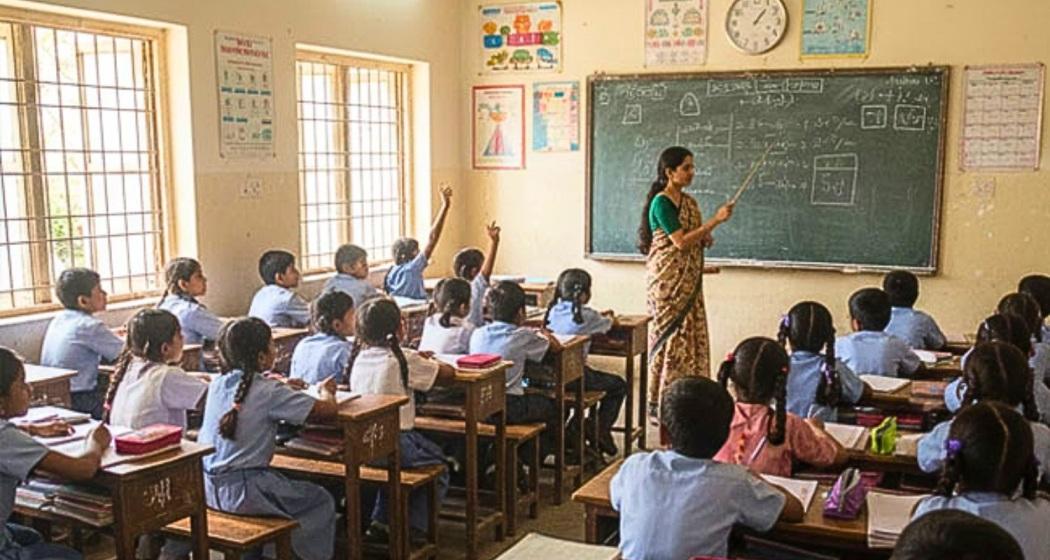
Khasi and Garo have been included in the Central Board of Secondary Education’s language curriculum, allowing affiliated schools to offer the two regional languages as optional third-language subjects from the 2026-27 academic session.
The revised list of languages on the Central Board of Secondary Education OASIS portal now includes Khasi and Garo under the three-language framework introduced through the National Education Policy (NEP) and the National Curriculum Framework (NCF).
The move comes after concerns were raised in Meghalaya over the omission of the two languages from CBSE’s earlier updated language structure.
Following the development, the Meghalaya government took up the matter with CBSE authorities through official communication and discussions, seeking recognition for Khasi and Garo within the national curriculum framework.
Chief Minister Conrad Sangma welcomed the decision and thanked Union Education Minister Dharmendra Pradhan for facilitating the inclusion of the two languages.
In a post on X, Sangma said the move would benefit students, reduce challenges faced by educational institutions and language teachers, and help preserve Meghalaya’s linguistic heritage.
Also read: Assam tables UCC Bill, seeks ban on polygamy
He said the decision reflected the importance of an education system that recognised and respected diverse languages and identities across the country.
With the update now reflected on the CBSE portal, more than 100 CBSE-affiliated schools in Meghalaya will be able to introduce Khasi or Garo as approved language options.
Schools have also been directed to update relevant information on the OASIS portal under the revised policy framework.
The inclusion is expected to strengthen the position of Khasi and Garo within India’s mainstream academic structure and encourage students to study their mother tongues.
The move is also likely to support ongoing efforts to preserve and promote indigenous tribal languages among younger generations in the state.
Across Meghalaya, the decision is being viewed as a significant recognition of the state’s native languages within the national education system.

 Follow us