Meghalaya has become the first state to replace the Mahatma Gandhi National Rural Employment Guarantee Act (MGNREGA) with the Viksit Bharat-Guarantee for Rozgar and Ajeevika Mission (Gramin) (VB-G RAM G) Act, 2025, after securing a Central sanction of ₹1,100 crore for implementation of the new programme until March 31, 2027.
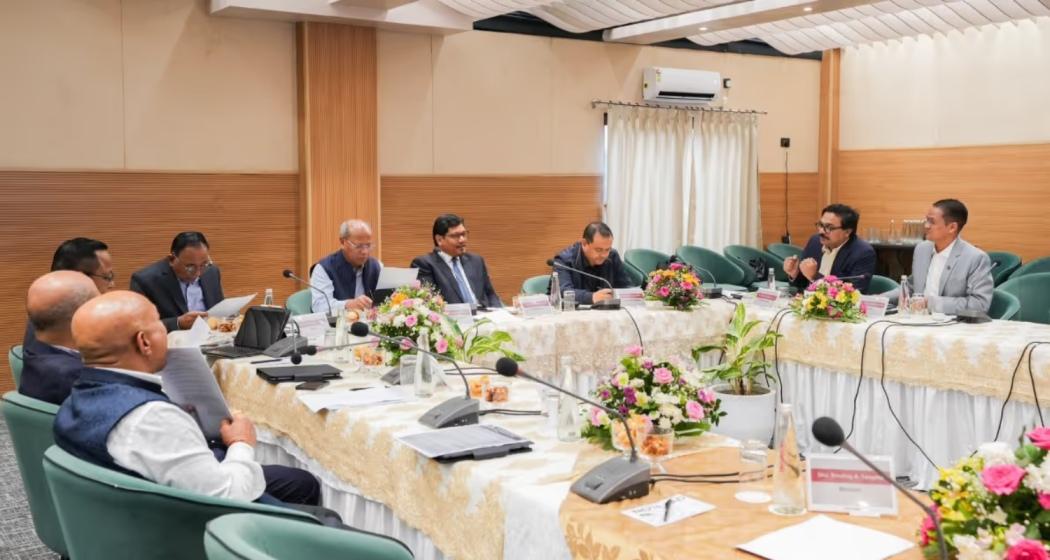
Chief Minister Conrad K Sangma announced on Tuesday that the state Cabinet had adopted the new rural employment law, marking a significant shift in the state's approach to rural development and employment generation.
The sanctioned amount covers the nine-month period from July to March and will be shared between the Centre and the state in a 90:10 ratio, with the Centre contributing 90 per cent of the expenditure. Sangma said any spending beyond the approved ₹1,100 crore would have to be borne entirely by the state government.
He said the rural employment programme had continued under the existing MGNREGA guidelines during the first quarter of the current financial year before the transition to the new framework.
Also read: Meghalaya tribal council denies Blinkit trading licence
Under the VB-G RAM G Act, the annual guaranteed employment has been increased from 100 days to 125 days. The legislation also broadens the range of permissible works from around 250 under MGNREGA to more than 320, allowing the state to undertake a wider variety of development projects.
Sangma said the new law permits the construction of anganwadi centres and school buildings, activities that were not allowed under the earlier scheme. It also places greater emphasis on rural roads, connectivity, livelihood generation, environmental conservation, water resource management and forest protection.
According to the Chief Minister, the expanded scope of the programme will provide Meghalaya with greater flexibility in implementing infrastructure and livelihood projects while generating additional employment opportunities in rural areas. He said the new framework is expected to strengthen rural development by enabling the state to address local priorities more effectively while improving the quality and reach of public assets.

 Follow us