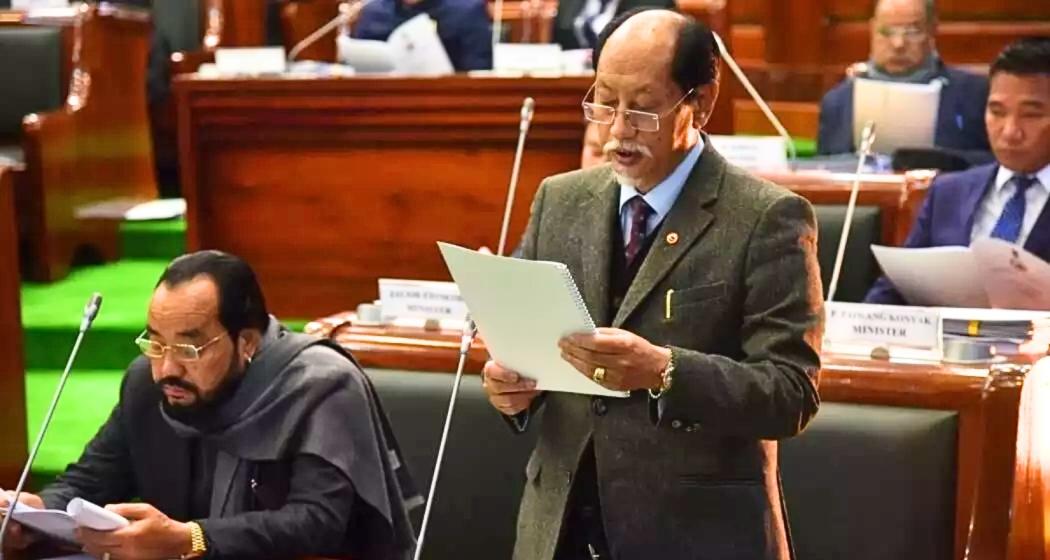
The Nagaland Cabinet on Tuesday signalled a possible breakthrough on the Eastern Nagaland People’s Organisation’s (ENPO) demand for Frontier Nagaland Territory, while clearing the way for oil and natural gas exploration and long-pending landholding reforms.
Briefing reporters after the Cabinet meeting at Chumoukedima, government spokesperson and minister K G Kenye said the Cabinet reviewed the status of the ENPO talks and expressed hope that an announcement could be made soon. He said discussions between the ENPO and the Government of India are scheduled in New Delhi, with the state government “keeping its fingers crossed” for a positive outcome.
Describing the Frontier Nagaland issue as one pursued for over a decade, Kenye said the government hoped it would be resolved in line with the wishes and aspirations of the people of eastern Nagaland.
To strengthen engagement with the Centre on political and constitutional issues, the Cabinet decided to constitute a sub-committee under the Political Affairs Committee. Convened by Chief Minister Neiphiu Rio, the panel will include the two Deputy Chief Ministers, Nagaland’s two Members of Parliament and select Cabinet ministers.
Also read: Nagaland wildfire nears Manipur, IAF aerial support called in
A delegation has already left for New Delhi to raise concerns over the Free Movement Regime and the re-imposition of the Protected Area Permit (PAP), which the state believes is adversely impacting Nagaland.
The Cabinet also revisited the issue of oil and natural gas exploration, stalled earlier due to litigation. Kenye said the case has since become infructuous after the petitioner withdrew, though a final judicial verdict is awaited.
He said the Cabinet has decided to proceed with exploration under Article 371A, which vests ownership of land and its resources with the people of Nagaland. “All resources, above and below the surface, belong to the landowners and the people, with the state acting only on their mandate and consent,” Kenye said.
The Cabinet also approved fresh directives to regulate landholding systems, requiring registration and land pattas for non-cadastral and government-occupied lands, along with payment of land revenue. Detailed notifications will follow.

 Follow us