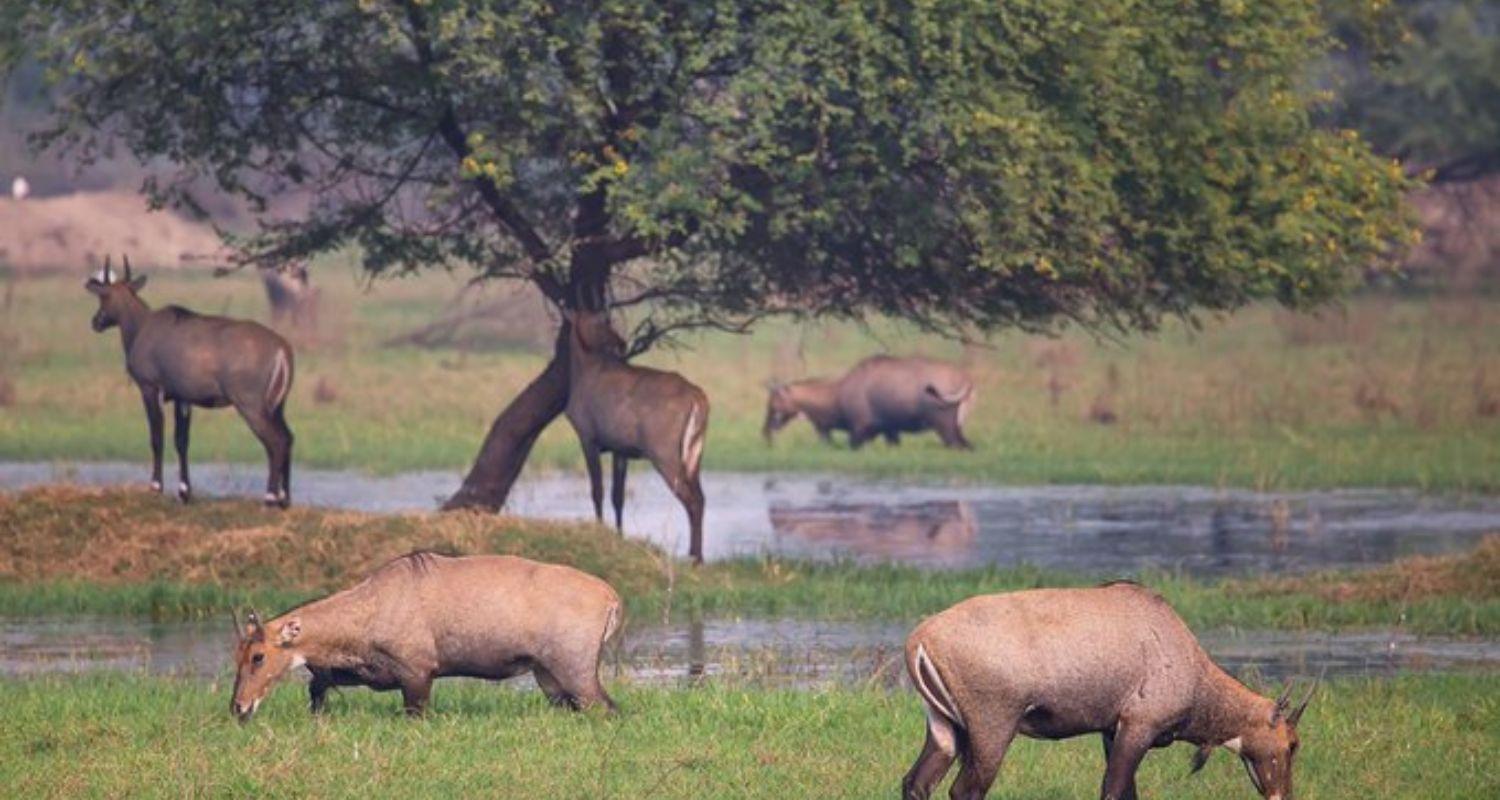
The growing threat posed by the Nilgai continues to trouble farmers across Palamu district, Jharkhand, with herds of the animal frequently straying out of forests and damaging standing crops. In response, the Forest department has initiated a detailed survey and is now working on a long-term strategy to mitigate the crisis.
A recent survey conducted by the department has provided fresh insights into the feeding habits of Nilgai. According to findings, the animals show a strong preference for the leaves of Khair and Ber. Based on this, authorities are planning to plant these species in forest areas to ensure a steady food supply and discourage the animals from entering agricultural fields.
Officials note that Palamu’s forests were historically rich in Khair and Ber, making this approach both ecologically viable and sustainable.
The survey also highlights a critical factor behind the rising conflict — overgrazing by domestic livestock near forest fringes. Large herds of cattle often consume the natural fodder meant for Nilgai, forcing the wild animals to venture into nearby farmlands in search of food.
“The Nilgai causes extensive agricultural damage in Palamu. One major reason is that livestock grazing along forest edges depletes their food sources,” said Satyam Kumar, Divisional Forest Officer (DFO), Palamu.
As an immediate relief measure, local Forest Committees will be mobilised to assist villagers in driving Nilgai back into forest areas. Out of nearly 700 committees in the district, 57 have been tasked with actively addressing the issue.
A fund of ₹1.57 crore has been allocated to support these efforts, with money being directly transferred to committee accounts. These funds will be used to organize special drives aimed at relocating Nilgai, as well as to address elephant-related challenges in the region.
The scale of the problem is significant. Around 1.54 lakh hectares of land in Palamu are affected by Nilgai activity. The worst-hit areas include Hussainabad, Haidarnagar, Mohammadganj, Pandu, Bishrampur, Sadar Block, Chhatarpur, and Nawbazar.
High concentrations of Nilgai have been reported along the banks of the Son and Koel rivers. Beyond crop damage, the animals have also been linked to road accidents on highways passing through the region.
During the 2024–25 financial year, the Forest department disbursed ₹62.7 lakh as compensation to farmers, with payouts ranging between ₹10,833 and ₹21,666 per hectare.
The Nilgai issue has repeatedly been raised in both the Lok Sabha and the Jharkhand Legislative Assembly, reflecting its seriousness. Based on survey findings, the Forest department is now drafting a comprehensive plan that includes improving water sources within forests, ensuring adequate fodder availability, and managing Nilgai movement patterns.
Officials acknowledge that the problem is part of a larger human-wildlife conflict, exacerbated by shrinking forest cover due to activities like stone mining and other human interventions.
With a mix of immediate action and long-term ecological planning, authorities hope to strike a balance between wildlife conservation and the protection of farmers’ livelihoods in Palamu.
Also read: Ranchi University to launch health and wellness centre

 Follow us