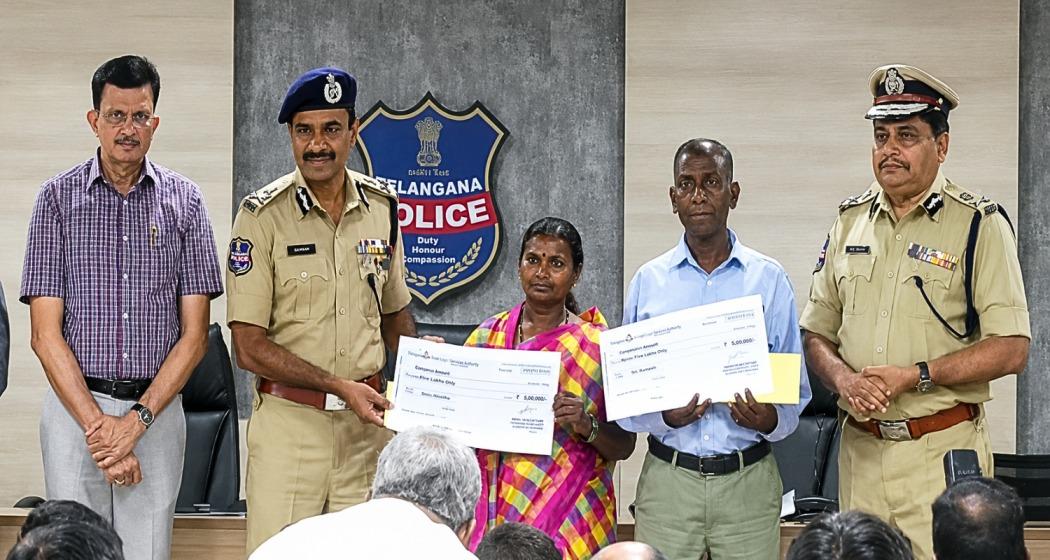
Senior Communist Party of India (Maoist) leader Pasunuri Narahari alias Viswanath and his wife Medara Danamma alias Joba alias Poonam surrendered before Telangana Director General of Police C V Anand on Wednesday in a major setback to the banned outfit.
Narahari, 64, is a Central Committee member and Secretary of the Bihar-Jharkhand Special Area Committee (BJSAK), while Danamma, 55, is a State Committee member. Police handed over reward amounts of ₹25 lakh and ₹20 lakh respectively to the couple.
Calling it a major breakthrough, Anand said the Maoist organisation’s remaining Eastern Regional Bureau had been pushed “to the brink of collapse”.
The DGP said the couple decided to surrender after losing faith in the future of the Maoist movement. Narahari, who has been suffering from serious health issues, had approached authorities around two weeks ago and was immediately provided medical treatment, he added.
Anand said 822 Maoist cadres have surrendered in Telangana since 2024, attributing the trend to sustained police action and the state’s rehabilitation policy.
Also read: 27 Maoists lay down arms in biggest ever surrender in Jharkhand
“We are setting up a skilling centre to help surrendered cadres reintegrate into society by identifying their talents and providing employment opportunities,” he said.
The DGP claimed that only 47 Maoist members remain active nationwide and named Ganapathi, Jode Ratnabai alias Sujatha and Varthasekhar alias Mangthu among the few Telangana-based leaders still underground.
A native of Hanumakonda district, Narahari joined the Maoist movement in 1982 and later became part of its Technical Wing in Dandakaranya. Police said he specialised in manufacturing and handling weapons, including firearms, mortars, rockets and improvised explosive devices, besides training cadres.
Speaking after surrendering, Narahari said the decision had the approval of Politburo member Misir Besra.
“The Telangana government’s surrender policy is encouraging. Leaders like Ganapathi and Misir Besra should also join the mainstream,” he said.
Officials said the surrender of the senior leaders was expected to further weaken the Maoist network in eastern and central India.

 Follow us