
Trending:
Siddaramaiah presents ₹4.48 lakh-cr budget
The budget estimates total revenue receipts at Rs 3,15,050 crore, comprising Rs 2,20,000 crore from the state’s own tax revenue, Rs 16,000 crore from non-tax revenue, and Rs 79,050 crore in transfers from the Union government. Follow us
- Bengaluru - UPDATED: March 6, 2026, 06:39 PM - 2 min read
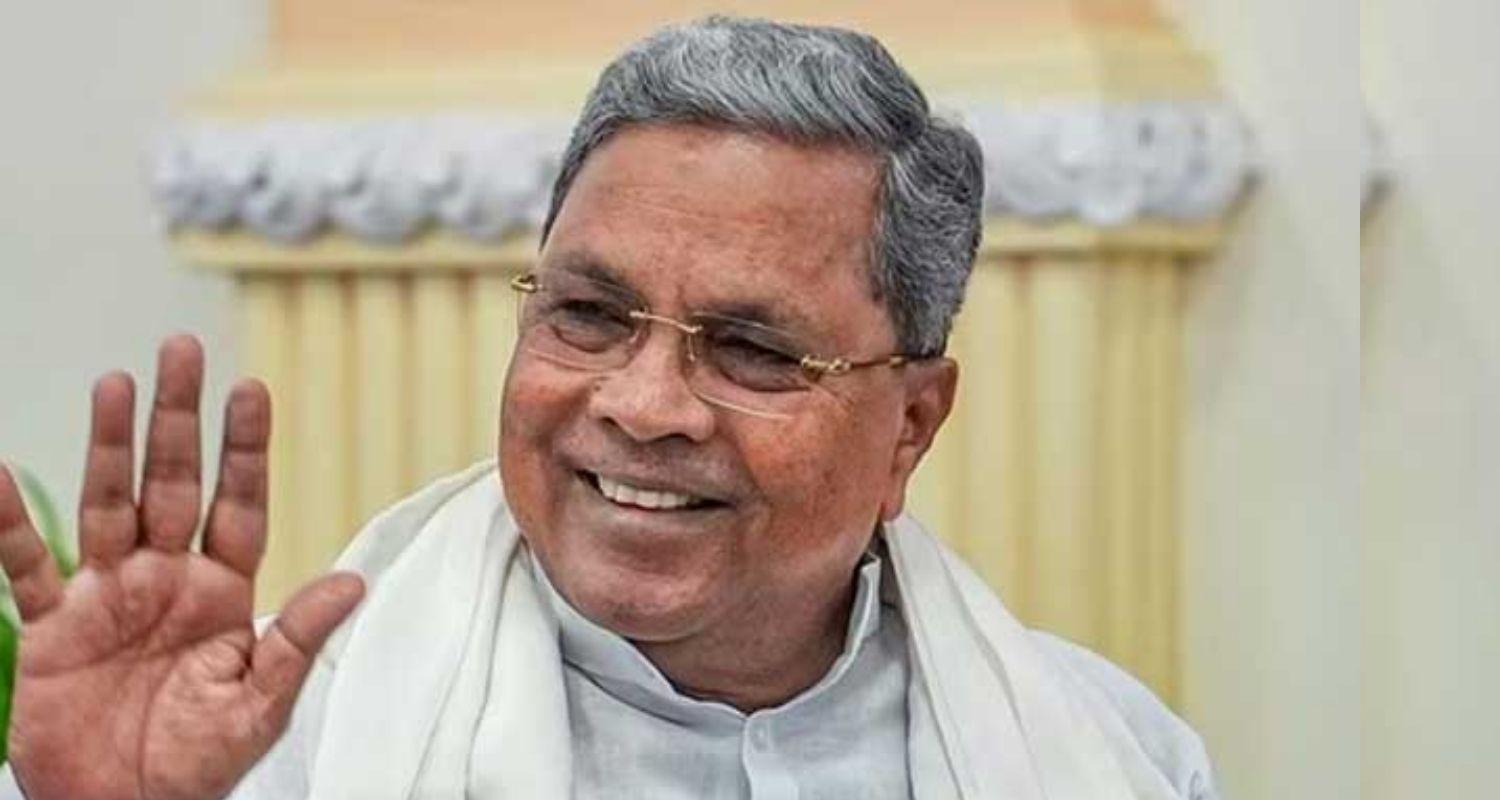
Chief Minister Siddaramaiah
Chief Minister Siddaramaiah on Friday presented the Karnataka Budget for the financial year 2026–27, emphasising inclusive development and support for all regions and communities in the state.
The budget estimates total revenue receipts at Rs 3,15,050 crore, comprising Rs 2,20,000 crore from the state’s own tax revenue, Rs 16,000 crore from non-tax revenue, and Rs 79,050 crore in transfers from the Union government.
Total expenditure for 2026–27 is projected at Rs 4,48,004 crore, including Rs 3,38,007 crore in revenue expenditure, Rs 74,682 crore in capital expenditure, and Rs 35,316 crore towards loan repayment.
The revenue deficit is estimated at Rs 22,957 crore, while the fiscal deficit is projected at Rs 97,449 crore, amounting to 2.95 per cent of the Gross State Domestic Product (GSDP). Total liabilities are expected to reach Rs 8,24,389 crore, accounting for 24.94 per cent of GSDP.
The Chief Minister announced that 56,432 vacant posts across government departments will be filled. Additionally, Rs 4,000 crore has been allocated for the second phase of the Chief Minister’s Infrastructure Development Fund, aimed at improving roads and public infrastructure.
Urban development, particularly in Bengaluru, received significant attention. The government allocated Rs 7,000 crore for infrastructure projects in the city, including Rs 3,000 crore for white-topping 450 km of roads. A 40-km tunnel road project costing Rs 40,000 crore under the BOOT model was also proposed, along with a tunnel road and elevated corridor between Hebbal Junction and Mekhri Circle costing Rs 2,250 crore.
Agriculture and farmer support
Agriculture remains a key priority, with the government outlining four pillars of farmer support: scientific farming guidance, financial assistance, access to high-quality agricultural inputs, and better crop management with expanded post-harvest storage.
The Chief Minister Krishi Vistara Yojana will be implemented with an outlay of Rs 100 crore over the next three years to promote value addition in agricultural crops and encourage the reuse of agricultural waste. A Millet Hub with a single-window system will also be established to promote millets and organic products.
The government aims to distribute Rs 30,000 crore in agricultural loans to 38 lakh farmers at zero percent interest. Silk parks will be set up in Ramanagara, Shidlaghatta, Haveri, Tandavapura and Kalaburagi, while 100 veterinary institution buildings will be constructed with NABARD assistance.
The state will also proceed with the Mekedatu Project after obtaining forest clearance from the Union Environment Ministry. A 1.2 TMC balancing reservoir will be constructed at Vaderahalli in Koratagere Taluk under the Yettinahalli Project. In addition, 33 new gates will be installed at the Tungabhadra Dam before the monsoon.
Education and student welfare
Education received a major push with the announcement of 800 new Karnataka Public Schools (KPS) at a cost of Rs 3,900 crore. The government will prioritise filling 15,000 vacant teaching posts in schools and colleges.
To address student stress, one mental health counsellor will be appointed in each of the 204 Block Resource Centres. The Chief Minister also proposed a ban on social media use for children below the age of 16 and announced strict measures against drug use in educational institutions.
In a significant policy shift, the government will reintroduce student union elections in colleges and universities. The state also plans to enact the Rohith Vemula Act to prevent caste-based discrimination and harassment in educational institutions.
The University of Visvesvaraya College of Engineering will be developed on the IIT model with an investment of Rs 500 crore. The government also announced Rs 30,000 scholarships for girl students pursuing higher education if they studied in government schools and colleges.
Healthcare and social welfare
In the health sector, Nutritional Rehabilitation Centres will be expanded to 63 taluks to address severe acute malnutrition among children. Free insulin pens will be provided to children under 18 suffering from Type 1 Diabetes.
The government allocated Rs 620 crore for the construction of medical colleges and super-speciality hospitals, and Rs 220 crore for procurement of medical equipment. The Sri Jayadeva Institute of Cardiovascular Sciences and Research hospital in Mysuru will be upgraded to a 600-bed facility. Hot cooked meals will be provided to pregnant and lactating women under the Matrupoorna Scheme at anganwadi centres.
The budget also introduced programmes for children of former Devadasis, including education and self-employment initiatives, and enhanced financial incentives for gender minorities and other welfare beneficiaries.
Energy, industry and environment
The government allocated Rs 19,290 crore as electricity subsidy for 36 lakh irrigation pumpsets and Rs 10,578 crore for the Gruha Jyothi Scheme.
Plans were also announced for a 2,000 MWh Battery Energy Storage System (BESS) at Huliyur, Pavagada and Kushtagi at a cost of Rs 3,400 crore, along with 1,250 electric vehicle charging stations under the PM E-Drive Scheme.
The state expects Rs 45,000 crore investment in the electronics and semiconductor sector, while Mysuru will be developed as the second IT hub of Karnataka.
Tourism and other measures
The government will formulate a Comprehensive Coastal Tourism Development Plan to boost tourism. Skill training will also be provided for taxi and auto drivers, while diploma courses will be introduced for tourist guides.
Under the Shakti Scheme, women have undertaken 684 crore trips so far, and Rs 5,300 crore has been allocated for the scheme in 2026–27. The budget also provides RS 1,271 crore to clear arrears of Road Transport Corporation employees and reduces sales tax on LNG from 14.34 per cent to 5 per cent.
Also read: Siddaramaiah announces plan for Bengaluru’s second airport
