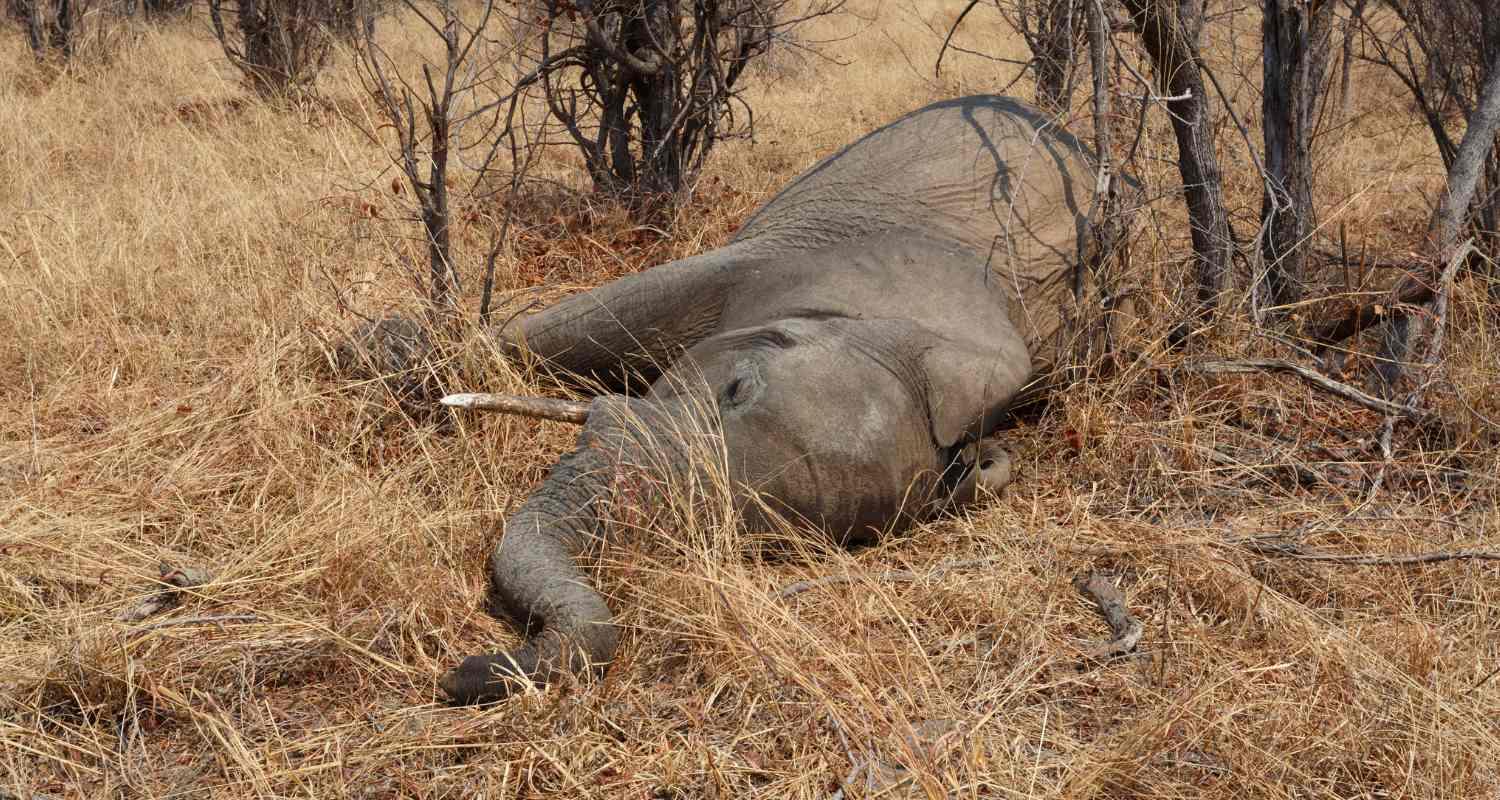
The death of a tusker injured in an IED explosion in the Saranda forest of West Singhbhum district of Jharkhand has once again exposed the growing threat faced by wild elephants in the region. The elephant succumbed to its injuries after undergoing treatment for nearly ten days, officials said on Friday.
The incident occurred in the Kolbonga area of the Saranda forest, where the tusker reportedly came in contact with an improvised explosive device planted inside the forest.
The blast caused severe injuries to one of its legs, leaving the elephant unable to walk properly. Forest officials said the animal was found in a weakened condition soon after the explosion and was immediately placed under medical care.
A specialised team of veterinarians and forest personnel camped in the forest area for several days in an effort to save the elephant. Officials said the animal was regularly administered medicines, injections, and supportive treatment while its health was monitored around the clock.
To aid recovery, the Forest Department also arranged a special diet for the injured tusker. Nearly one to one-and-a-half quintals of vegetables and other food items were reportedly being supplied every day.
Despite continuous treatment and intensive care, the elephant’s condition failed to improve, and it eventually died. Forest officials have begun the process of conducting a post-mortem examination, after which the carcass will be disposed of as per protocol.
The incident has intensified concerns among wildlife experts and conservationists, as this is the sixth elephant death linked to IED blasts in the Saranda forest within the past year.
Environmentalists have expressed serious concern over the increasing use of explosive devices in forest areas, warning that such incidents pose a major threat to biodiversity and wildlife conservation efforts in Jharkhand.

 Follow us