
Trending:
Telangana Education Commission unearths a litany of lapses
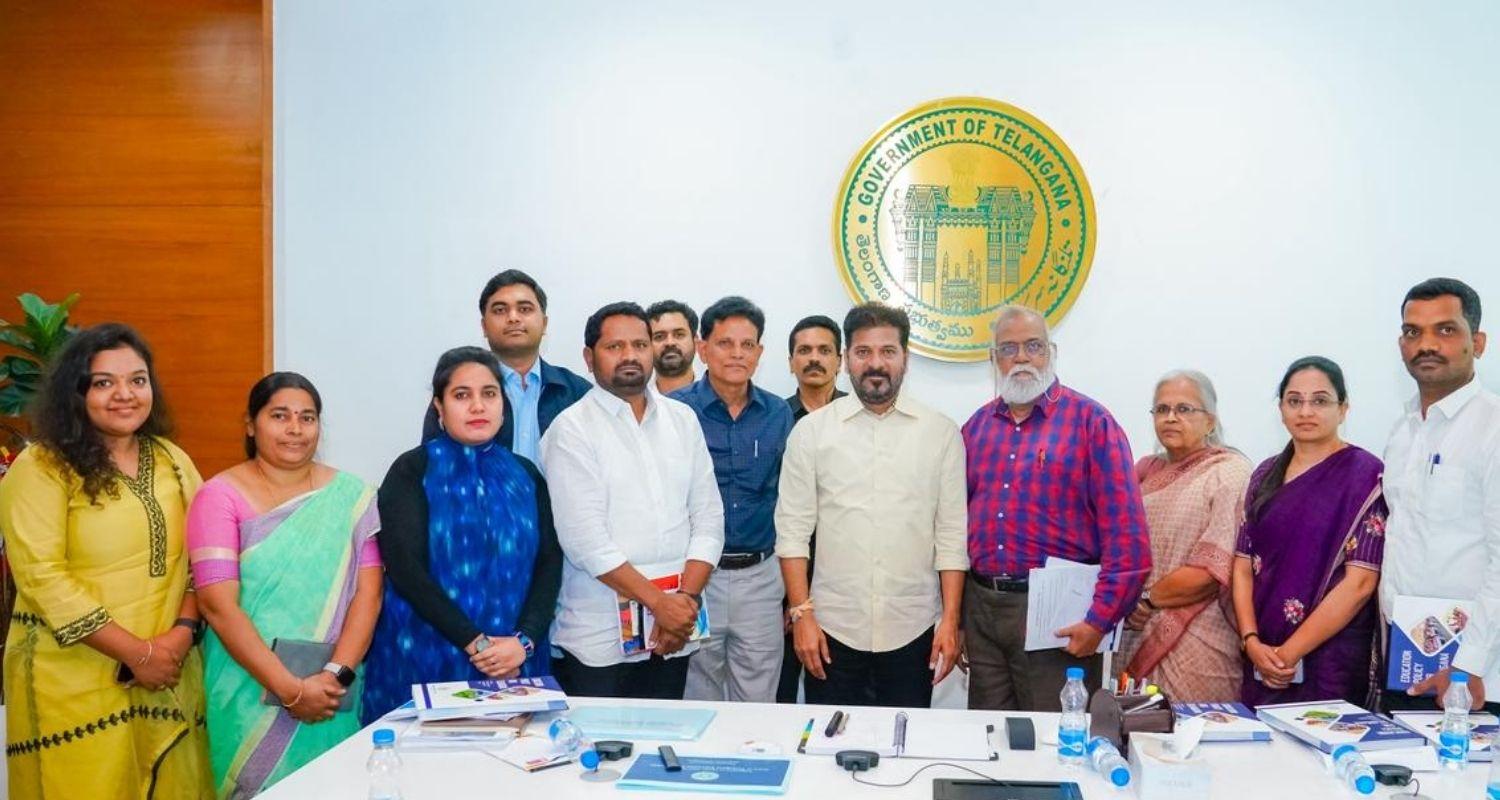
The Commission members spent 14 months visiting the institutions across 33 districts and submitted its final report to Chief Minister A Revanth Reddy on February 27. Follow us
News Arena Network - Hyderabad - UPDATED: March 4, 2026, 02:04 PM - 2 min read
Telangana, India’s youngest state, runs 1,855 residential institutions. It houses 7.45 lakh children inside them.
A Commission appointed by the Telangana government has found serious flaws across the state’s education system, including inflated infrastructure data, fabricated assessment outcomes and severe shortages in residential schools where children are forced to wake up at 3 am to access basic facilities.
In its report, the Telangana Education Commission revealed that many teacher-training colleges function largely on paper, teachers spend only three hours a day in classrooms, mid-day meals are prepared in unsafe conditions, and fewer than 100 of the 40,966 recorded school libraries are functional.
Telangana, India’s youngest state, runs 1,855 residential institutions. It houses 7.45 lakh children inside them. In many of those buildings, there are not enough bathrooms.
“Because there are too many students and too few washrooms, children are forced to wake up as early as 3.00 am just to bathe or wash clothes. This routine leads to constant sleep deprivation and mental stress,” the report said.
The Commission members spent 14 months visiting the institutions across 33 districts and submitted its final report to Chief Minister A Revanth Reddy on February 27.
40,966 libraries. Fewer than 100 work
The government’s own data system records 40,966 school libraries, reading corners, or book banks across Telangana. The Commission walked into those schools.
“Most government schools do not have a library; in fact, not even 100 government schools in the state have a functional library; in the name of book bank, a pile of textbooks are usually locked up in a bureau in a corner of a classroom, seldom accessible to the students,” the report said.
Similarly, the official data says there are 37,095 computers across Telangana schools. The Commission found “computer labs are non-existent and where they exist, are mostly dysfunctional.” The state has been counting machines that do not turn on, in rooms that do not exist, and calling it infrastructure.
Schools manufacture their own exam scores
The Commission found that schools do not improve results. They produce them.
“Schools know what scores, aggregates, and improvements over baselines the authorities would like to see and game the assessments, including, shockingly, by promoting malpractice during exams, to deliver just that,” it said.
Schools are judged by the scores they control. They control the scores. Internal assessments have become, in the Commission’s words, “perfunctory and performative at once”, conducted as a compliance exercise, scored to satisfy administrative pressure, producing data that reflects nothing about actual learning.
In Class V, 29.3 percent of children in government schools can read a Class II-level text. Telangana ranked 29th nationally in the Performance Grading Index in 2022–23.
The teacher-training colleges that train no one
The Commission sent investigators to two private teacher education institutions in Ranga Reddy district. These colleges produce the teachers who enter Telangana classrooms every year.
“The Commission found that the colleges exist largely on paper, with no regular classes, absent staff, missing academic records, and deserted premises; during examinations, non-faculty invigilators, delayed question papers, inadequate supervision, and fraudulent record entries were noticed.”
This is not one rogue institution. The Commission describes it as “a glimpse into the overall picture of gross regulatory neglect of teacher education in the private sector in Telangana.”
The state bodies meant to train and support government school teachers are no better. Of 286 sanctioned posts across the District Institutes of Education and Training, 16 are filled. “A working strength of just 5.59 per cent.” SCERT, the apex academic body for school education, carries approximately 70 percent vacancies.
Also read: With eye on polls, Reddy pushes for urban governance reforms
These institutions draw budgets. They submit annual reports. They oversee almost nothing, because there is almost no one inside them.
A teacher spends three hours a day teaching
A joint study by the University of Hyderabad, UNICEF, and Samagra Shiksha measured how much time a government school teacher in Telangana actually spends teaching.
“The average teaching time available to a teacher is just 3 hours per day, often fragmented into 15-20 minute intervals. This means that more than half of the workday is consumed by non-teaching responsibilities.”
The rest disappears into attendance registers, mid-day meal records, data entry, and government reporting requirements. In single-teacher schools, and nearly 36 percent of primary schools have one teacher or none, one person runs the entire institution while attempting to teach multiple grades simultaneously.
The Commission found that governments have not fixed this. “Governments have been hesitant to insist on such dedication from the teaching community due to its significant political influence.”
Children eat food prepared next to washrooms, under trees, inside classrooms.
The Commission documented mid-day meal preparation conditions across the state.
“In many instances, food is prepared in open spaces, under trees, inside or adjacent to classrooms, near washrooms, or within cramped and poorly ventilated sheds.”
Physical contaminants recorded during field visits: pebbles, stones, metal, glass, insects, hair. Biological contaminants: bacteria, mould, viruses, parasites. Utensils are damaged and rusted. Storage facilities show rodent infestation. The women who cook this food receive their payments late, at rates below market price.
As many as 7.45 lakh children eat this food every day.
Advertisement scam
After IIT JEE 2025 results were announced, corporate junior colleges across Telangana ran full-page newspaper advertisements.
Multiple colleges had each published separate advertisements claiming credit for the same 11 students who had secured top ranks. Not similar students. Not students from affiliated campuses. “The exact same eleven children, reproduced across competing institutions, each presenting the same photograph and rank as evidence of its own excellence.”
“As a result of such advertisements, lakhs of unsuspecting parents rush in to enrol their children in corporate institutions, often at very high fees, in the hope that such coaching will pave the path for their children securing a seat in IITs.”
Corporate coaching colleges charge families between Rs 3 lakh and Rs 6 lakh for two years of integrated IIT-JEE and NEET preparation, before hostel, food, and transport fees.
“What the corporate colleges do not divulge is the ratio of students succeeding in competitive exams to the total students enrolled. This is not disclosed for the simple reason that the number of successful students constitutes a very small proportion of the total students enrolled, sometimes as low as less than 1%.”
“The business model of this industry worth thousands of crores of rupees is maximising revenue through the number of admissions. The success of a few top rankers is used to sell the dreams of success in IITs/NEET to lakhs of trusting parents in Telangana.”
Inside these colleges, students who paid identical fees do not receive identical teaching.
Admissions are sorted into batches by performance in an internal entrance test. The Commission found that capable faculty are deployed almost exclusively to the highest-performing batch.
“Faculty members coaching students enrolled in lower batches do not tend to be of the same calibre as those engaged in coaching the top batches.”
Nearly 40 per cent of residential institutions function from rented or makeshift premises, “lacking basic safety features, adequate classrooms, laboratories, sanitation facilities, and secure residential spaces.”
For adolescent girls: no private bathing areas. No sanitary napkin dispensers. No incinerators. The Commission links these conditions directly to anaemia, infections, and inability to concentrate in class.
Nearly 24 per cent of women aged 20-24 in Telangana were married before the legal age of marriage. Junior college authorities, whose students sit squarely in this window of vulnerability, have never been integrated into child marriage prevention mechanisms. “Not involving junior colleges in child marriage prevention is a significant policy ga,” the report said.
