
Trending:
Telugu states get massive budget for high-speed trains
Briefing the media virtually from New Delhi, the Railways minister outlined the budgetary allocations and major projects underway in both states. Follow us
News Arena Network - Hyderabad - UPDATED: February 3, 2026, 08:20 PM - 2 min read
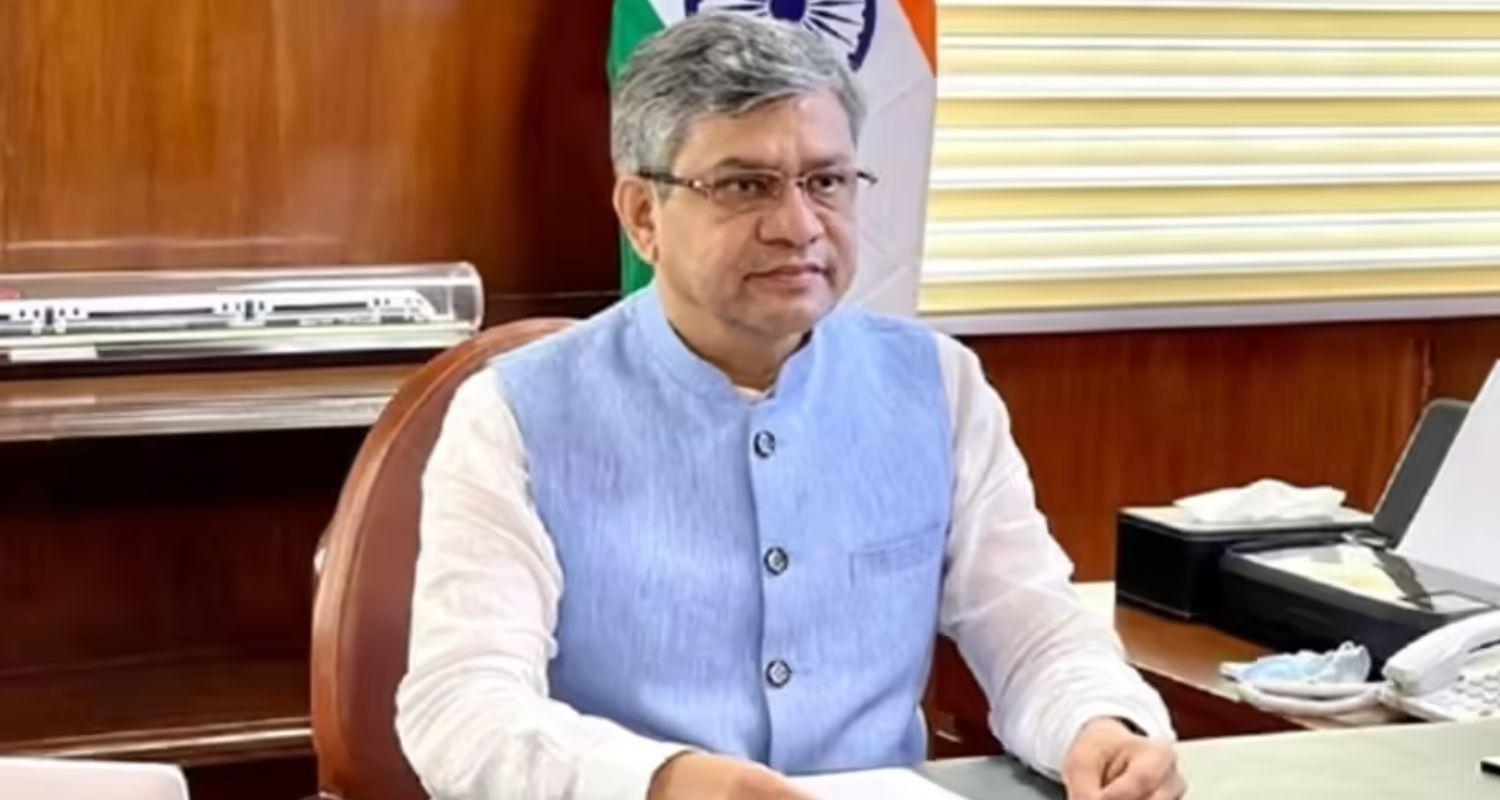
Minister for Railways, Information & Broadcasting and Electronics & IT Ashwini Vaishnaw - file image.
The Union Budget for 2026–27 has given a massive boost to railway infrastructure in the Telugu states, with Andhra Pradesh and Telangana together receiving a record allocation of ₹15,588 crore for ongoing and new railway projects.
Minister for Railways, Information & Broadcasting and Electronics & IT Ashwini Vaishnaw said the increased outlay reflected the Union government’s sustained commitment to strengthening rail connectivity, mobility and economic growth in the region.
Briefing the media virtually from New Delhi, the Railways minister outlined the budgetary allocations and major projects underway in both states.
According to the Minister, Andhra Pradesh has been sanctioned ₹10,134 crore for railway development during the 2026–27 financial year, while Telangana has received ₹5,454 crore. These allocations are among the highest ever provided to the two states in a single budget year.
Vaishnaw said that the current level of funding marks a sharp increase compared to the allocations during the pre-bifurcation era. He pointed out that the annual average railway budget outlay for the combined undivided Andhra Pradesh between 2009 and 2014 stood at just ₹886 crore.
“In contrast, the current allocation represents an 11-fold increase for Andhra Pradesh and nearly a six-fold increase for Telangana compared to the annual average during the 2009–14 period,” the minister said, underlining what he described as a “historic correction” in infrastructure investment.
The Railways minister said that infrastructure projects worth ₹92,649 crore are currently under various stages of execution across Andhra Pradesh. These include new lines, doubling and tripling of existing routes, station redevelopment, electrification works and signalling upgrades aimed at enhancing operational efficiency and passenger safety.
In Telangana, railway infrastructure projects worth ₹47,984 crore are currently in progress, covering similar works aimed at expanding the network and improving connectivity within the state and with neighbouring regions.
Officials said that several of these projects are critical for decongesting key freight and passenger corridors, especially in sections witnessing heavy coal, cement, agricultural and industrial traffic.
A major milestone highlighted during the press conference was the achievement of 100 percent electrification of the railway network in both Andhra Pradesh and Telangana.
“With the completion of electrification works, the entire railway network in Andhra Pradesh and Telangana is now fully electrified,” the minister said. He noted that full electrification would reduce dependence on fossil fuels, lower operating costs, improve energy efficiency and contribute to India’s broader climate and sustainability goals.
Railway officials added that electrification would also enable the operation of faster and heavier trains, enhancing line capacity and reducing travel time for both passengers and freight.
One of the most significant announcements made by the Railways minister was the introduction of seven high-speed rail corridors across the country, three of which will originate or terminate in Hyderabad.
“These high-speed corridors will form a triangle with Hyderabad at the centre, dramatically improving inter-city mobility and acting as powerful economic growth corridors,” Vaishnaw said.
The three high-speed rail routes connected to Hyderabad are expected to link the city with Bengaluru, Chennai and Pune. Once operational, travel time between Hyderabad and Bengaluru is projected to be reduced to around two hours, while the Hyderabad–Chennai journey is expected to take approximately two hours and 55 minutes. The travel time between Hyderabad and Pune is estimated at one hour and 55 minutes.
For Andhra Pradesh, two of these high-speed rail corridors — Hyderabad–Bengaluru and Hyderabad–Chennai — will pass largely through the state, bringing significant benefits in terms of faster travel, improved connectivity and economic opportunities for towns and cities along the routes
Railways officials said the high-speed corridors would support growth in sectors such as education, healthcare, tourism, logistics and business by enabling rapid and reliable inter-city movement.
The Railways minister emphasised that the enhanced budgetary support and upcoming high-speed rail projects would play a key role in transforming the economic landscape of both Andhra Pradesh and Telangana.
“These corridors will not merely reduce travel time, but will also act as catalysts for regional development by connecting growth centres, industrial clusters and ports with major urban hubs,” he said.
In Andhra Pradesh, officials said that improved rail connectivity would complement the state’s port-led development strategy, supporting the movement of goods between ports, industrial parks and hinterland regions.
In Telangana, investments in rail infrastructure are expected to reinforce Hyderabad’s position as a major IT, pharmaceutical, manufacturing and logistics hub, while also improving connectivity to backward and tribal regions.
While outlining the broad investment picture, railway officials also said that part of the allocation would go towards station redevelopment, modern passenger amenities and safety-related works.
Several stations in both states are being redeveloped under the Amrit Bharat Station Scheme, with improved platforms, waiting halls, foot overbridges, parking facilities and digital information systems.
Safety upgrades such as automatic signalling, elimination of unmanned level crossings and strengthening of track infrastructure are also being prioritised as part of the ongoing works.
Later, South Central Railway SCR General Manager Sanjay Kumar Srivastava, who spoke to the media, said: “The SCR network is witnessing steady growth in both passenger and freight traffic. The increased allocations will enable us to enhance capacity, improve punctuality and provide better services to passengers.”
Also read: Revanth to begin district tour ahead of municipal elections
