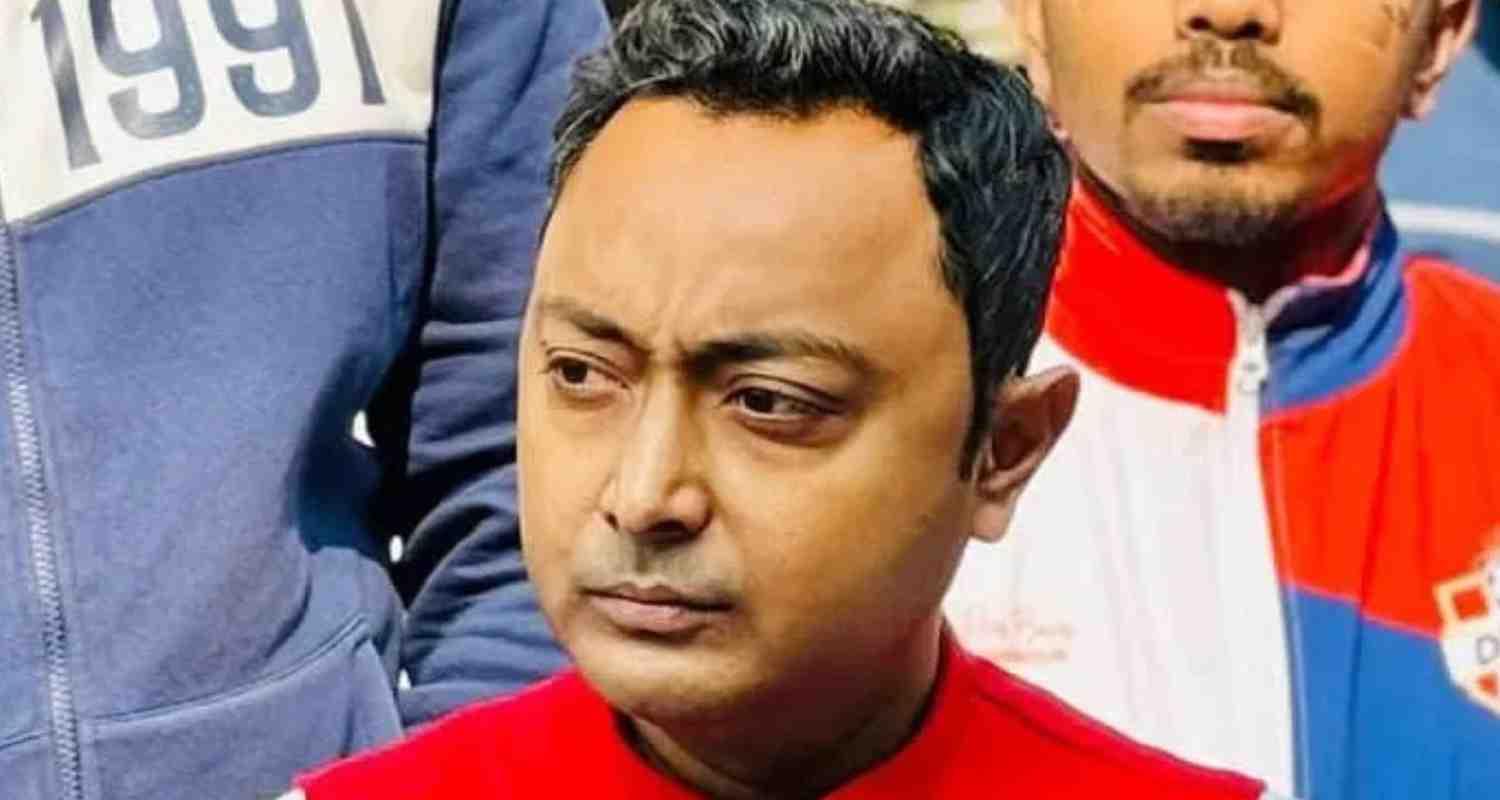
Trinamool Congress (TMC)’s youth wing leader and a councilor and Member-in-Charge (MIC) of the Bidhannagar Municipal Corporation, Debraj Chakraborty, was arrested late on Tuesday night in connection with alleged corruption charges. Chakraborty, widely regarded as a close confidant of TMC’s national General Secretary Abhishek Banerjee, was taken into custody following a joint operation by the State Police and the Intelligence Branch.
Notably, his detention coincided with the withdrawal of TMC candidate Jahangir Khan from the electoral contest in Falta—an overlap that has drawn attention across political circles.
Sources indicate that Chakraborty had been untraceable since the declaration of the Assembly election results on May 4. Speculation had been rife that he had gone into hiding to evade impending legal action. During this period, he reportedly kept all communication channels shut, making it difficult even for his close associates to locate him.
However, acting on a confidential tip-off, police conducted a targeted raid at a location where Chakraborty was believed to be sheltering. He was arrested and is currently undergoing interrogation.
Investigators have reportedly compiled a detailed dossier outlining alleged financial irregularities tied to Chakraborty. These include accusations of facilitating questionable recruitment drives and irregular tender allocations within the Bidhannagar municipal area. He had earlier come under the scanner of central agencies like the Enforcement Directorate (ED) and the Central Bureau of Investigation (CBI) in connection with the teacher recruitment scam.
Within the TMC, Chakraborty was considered a powerful youth leader, wielding considerable influence across North 24 Parganas—from Kamarhati to Bidhannagar. His proximity to the party’s central leadership, headquartered on Camac Street, further cemented his authority within the organisation.
Chakraborty’s arrest comes amid a broader crackdown on influential TMC leaders following the recent change in government. Political observers suggest that this may be part of a larger strategy to dismantle the party’s organisational and financial networks.
Recent actions—including demolition notices issued to properties linked to party figures and the withdrawal of key candidates—are being viewed as interconnected developments. Some analysts believe that just as Suvendu Adhikari moved swiftly on policy decisions such as revising OBC reservations after assuming office, a parallel effort may now be underway to weaken the opposition structurally.

 Follow us