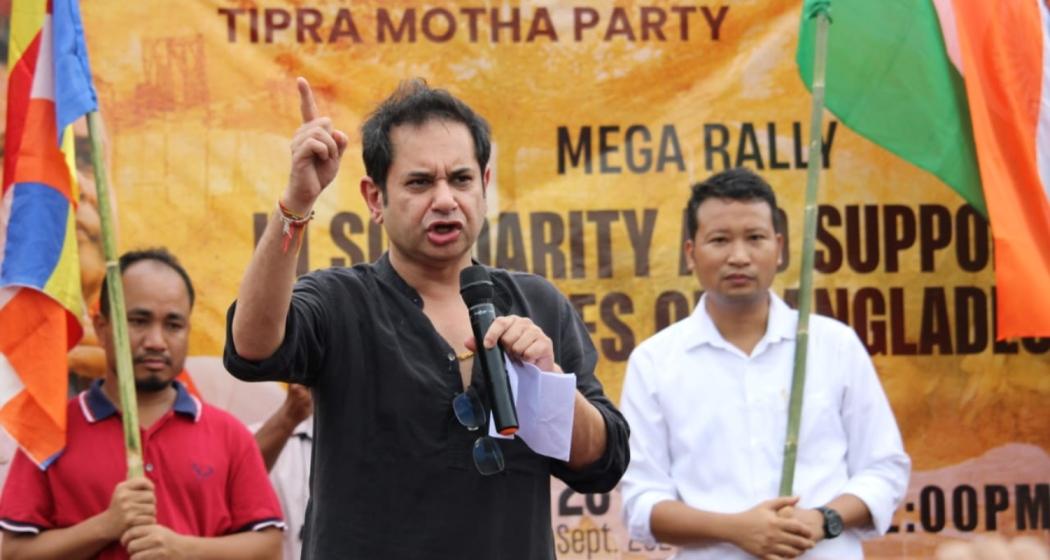
: Pradyot Kishore Manikya Debbarma on Saturday pledged to “completely overhaul” education infrastructure in areas under the Tripura Tribal Areas Autonomous District Council (TTAADC), following his party’s sweeping victory in the recent council polls.
The assurance comes a week after the Tipra Motha Party secured a landslide win, capturing 24 of the 28 seats in the tribal council, consolidating its influence in the northeastern state.
Highlighting the condition of schools in the TTAADC region, Debbarma said he had witnessed stark realities during the election campaign, including students attending classes barefoot and in torn uniforms, often in institutions lacking adequate teaching staff.
According to the state’s education department, 340 schools in Tripura were functioning with only a single teacher as of September 2025, all of them located within TTAADC areas.
“I promise to completely overhaul the education system to ensure quality education for all tribal students. We have begun preparing a draft education policy for a qualitative change in education,” Debbarma said in a Facebook post.
He also announced plans to establish a coaching centre at Khumulwng, the headquarters of the TTAADC, to support aspirants preparing for the UPSC and state civil services examinations.
Also read: Tripura: TIPRA Motha begins process for new TTAADC council
Beyond education, the Tipra Motha Party chief outlined a broader development agenda, including ensuring access to drinking water in all tribal hamlets, many of which continue to face shortages of basic amenities.
“The TMP-governed tribal council will introduce a transparent recruitment policy to provide a level playing field to all job aspirants. There will be no recruitment without advertisements in local media and proper interviews,” he said.
Debbarma further committed to setting up a modern sports coaching centre at Khumulwng to nurture talent among tribal youth and provide structured training opportunities.
The announcements form part of the party’s initial roadmap after assuming control of the tribal council, with a focus on addressing long-standing gaps in education, infrastructure and employment in the region.

 Follow us