Tripura marked Chaitra Sankranti, the last day of the Bengali calendar year, with rituals, fairs and cultural festivities across the state on Tuesday.
Observed as a symbolic transition to the new year, the festival saw participation from both urban and rural communities, reflecting a blend of spirituality, folk traditions and agrarian practices.
In areas such as Kalyanpur, Mohorchhara, Ratiya and Dwarikapur Kalibari, the Charak festival drew large gatherings of devotees. Participants performed ritual acts of devotion, including climbing ceremonial Charak trees, accompanied by traditional drum beats.
The Gajan festival, associated with deities such as Shiva and Dharma, was also observed with folk performances, music and rituals rooted in rural life. Devotees sought blessings for rainfall and relief from the summer heat, in keeping with long-standing agricultural traditions.
Fairs organised across the state witnessed significant footfall, with stalls selling bamboo, cane, clay and metal crafts, alongside toys and seasonal fruits. While older attractions such as circuses and puppet shows have largely faded, the fairs continue to serve as important community spaces.
Also read: Tripura ADC polls see 83% turnout, re-poll on Apr 16
Historians trace the origins of such gatherings to the zamindari period, when they may have functioned as tax collection points before evolving into cultural events.
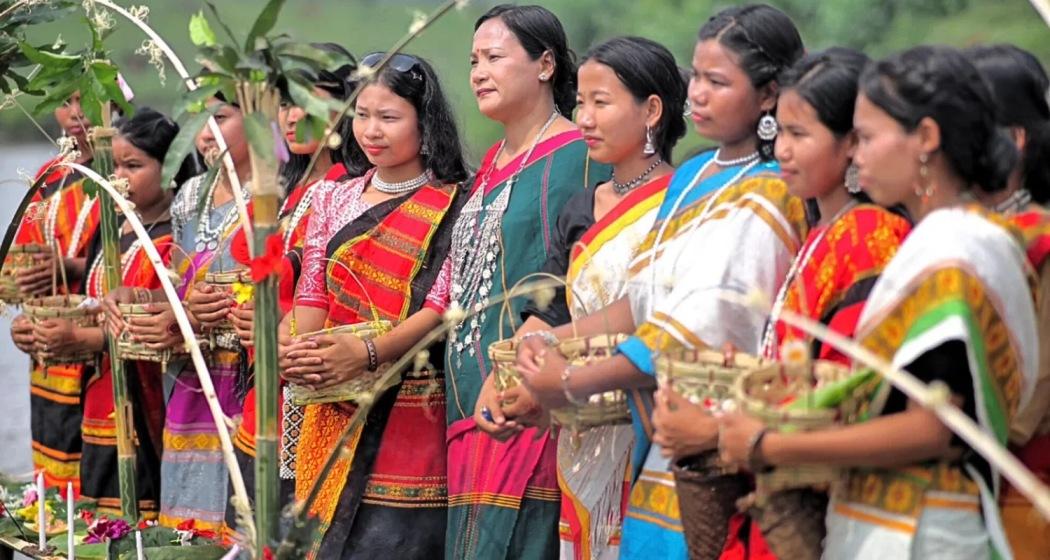
Among tribal communities, year-end observances included the Biju festival in hill regions. Indigenous groups prepared traditional dishes, performed ritual bathing to honour elders, and took part in music and dance.
The festival also signals preparations for jhum cultivation ahead of the monsoon, underlining its link to the agricultural cycle.
Chaitra Sankranti in Tripura thus remains more than a religious occasion, bringing together devotion, cultural expression and community life, while marking the passage from one year to the next.

 Follow us