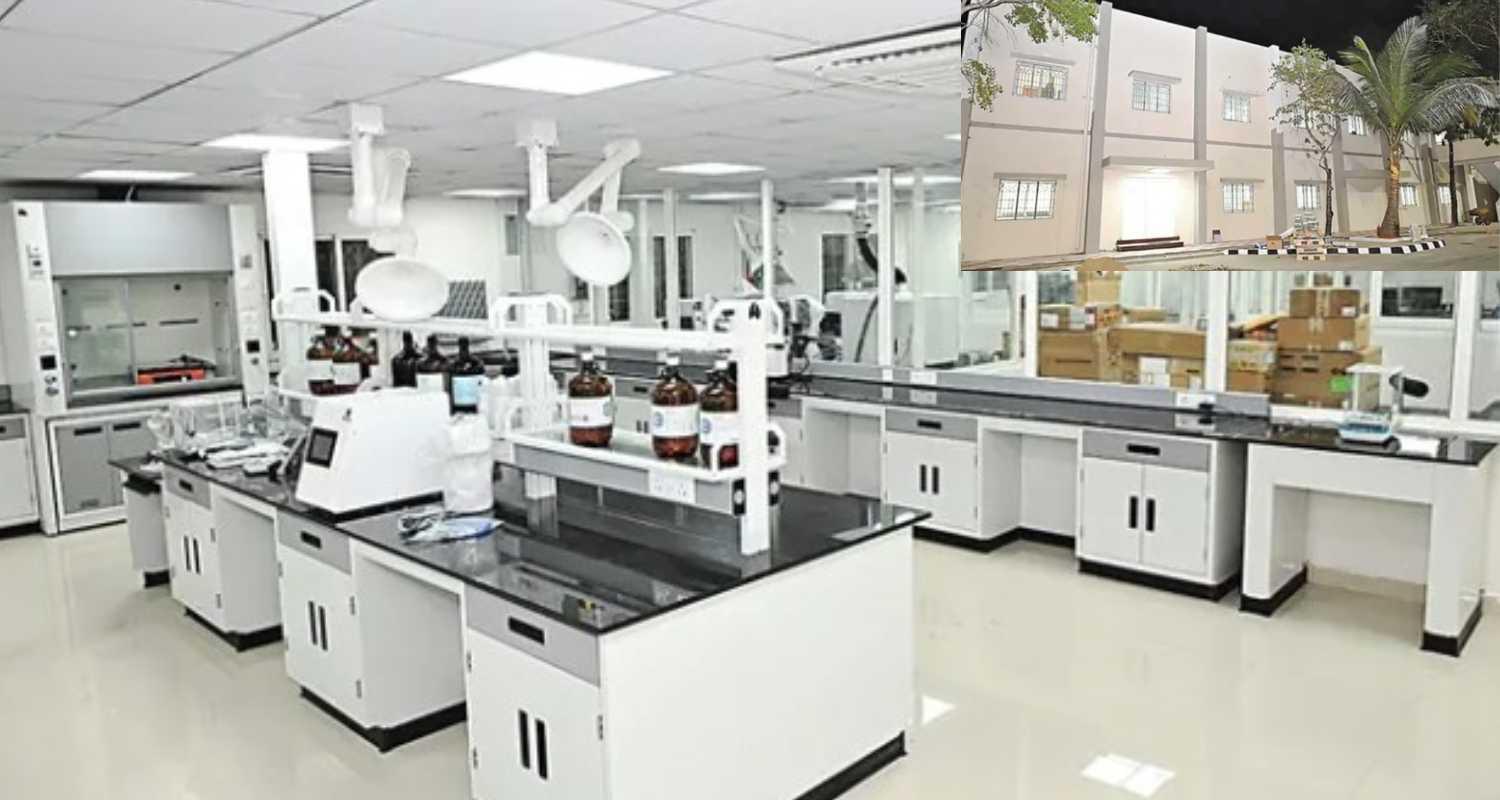
In a significant move aimed at safeguarding the quality and sanctity of temple offerings, the Tirumala Tirupati Devasthanams (TTD) has established a state-of-the-art food testing laboratory in Tirumala. The facility, built at a cost of nearly Rs 20 crore, will be inaugurated on March 21 by N Chandrababu Naidu.
Developed under the supervision of TTD and the state food safety commissioner, with support from the Food Safety and Standards Authority of India (FSSAI), the 12,000 sq ft laboratory is among the most advanced of its kind in any temple in the country.
Officials said the lab is equipped to detect adulteration at parts per trillion (PPT), a major leap from earlier capabilities at parts per million (PPM). This enables the identification of even the slightest contamination in ingredients used for preparing the iconic Srivari Laddu and Annaprasadam.
The ground floor houses facilities for detailed chemical and physical analysis of key ingredients such as ghee, oils, and water. Parameters including acidity, iodine value, and the presence of chlorides, sulfates, and magnesium will be closely monitored.
High-end instruments such as LC-MS and ICP-MS—valued at around Rs 2.5 crore—allow detection of pesticides, antibiotics, aflatoxins, and preservatives. The lab can also identify trace levels of heavy metals like lead, arsenic, and chromium.
Additional equipment includes a bomb calorimeter to measure energy content in laddus and a fat analyzer to determine precise ghee proportions. Instruments like atomic absorption spectrometers and flame photometers will help quantify essential nutrients such as calcium, sodium, and zinc. A deep freezer capable of maintaining temperatures up to -40°C ensures sample integrity.
The first floor is dedicated to microbiological testing, where bacteria such as E. coli and Salmonella can be detected. A sophisticated air handling system maintains sterile conditions by regulating temperature, humidity, and air purity.
In a further technological upgrade, the Centre has sanctioned Rs 3 crore for installing “E-Nose” and “E-Tongue” devices, which can analyse aroma and taste to detect adulteration in ghee and other ingredients with high precision.
TTD Additional Executive Officer Ch Venkaiah Chowdary said the lab was completed in a record nine months.
“There is no longer any need to send samples outside. Everything can now be tested in-house—from chemical residues to microbial contamination,” he said.
The development comes amid an ongoing probe into alleged adulteration in temple prasadam. Dinesh Kumar, chairman of a single-member commission appointed by the state government, inspected the TTD’s testing facilities on Wednesday.
After offering prayers at the Tirumala Venkateswara Temple, he reviewed both the existing and upgraded laboratory infrastructure. Officials briefed him on quality control mechanisms and the evolution of testing capabilities. They revealed that between 2020 and 2024, the earlier lab setup was minimal, equipped with basic tools such as a pH meter and weighing balance, collectively valued at less than Rs 50,000, with limited ability to detect adulteration.
The upgraded facility now includes equipment worth Rs 77 lakh installed under the aegis of the National Dairy Development Board (NDDB), aligned with FSSAI standards. This system enables precise detection of pesticides, accurate fat measurement in ghee, and identification of adulterants such as vegetable oils or animal fats.
Kumar also visited the food quality testing centre, a joint initiative of the Centre, the state government, and TTD, accompanied by senior officials.
The inspection gains importance amid heightened scrutiny over the quality of ingredients used in temple offerings. With the new laboratory, TTD aims to establish a benchmark in ensuring both safety and sanctity of prasadam served to millions of devotees each year.
Authorities said the initiative not only addresses past concerns but also strengthens safeguards for the future.

 Follow us