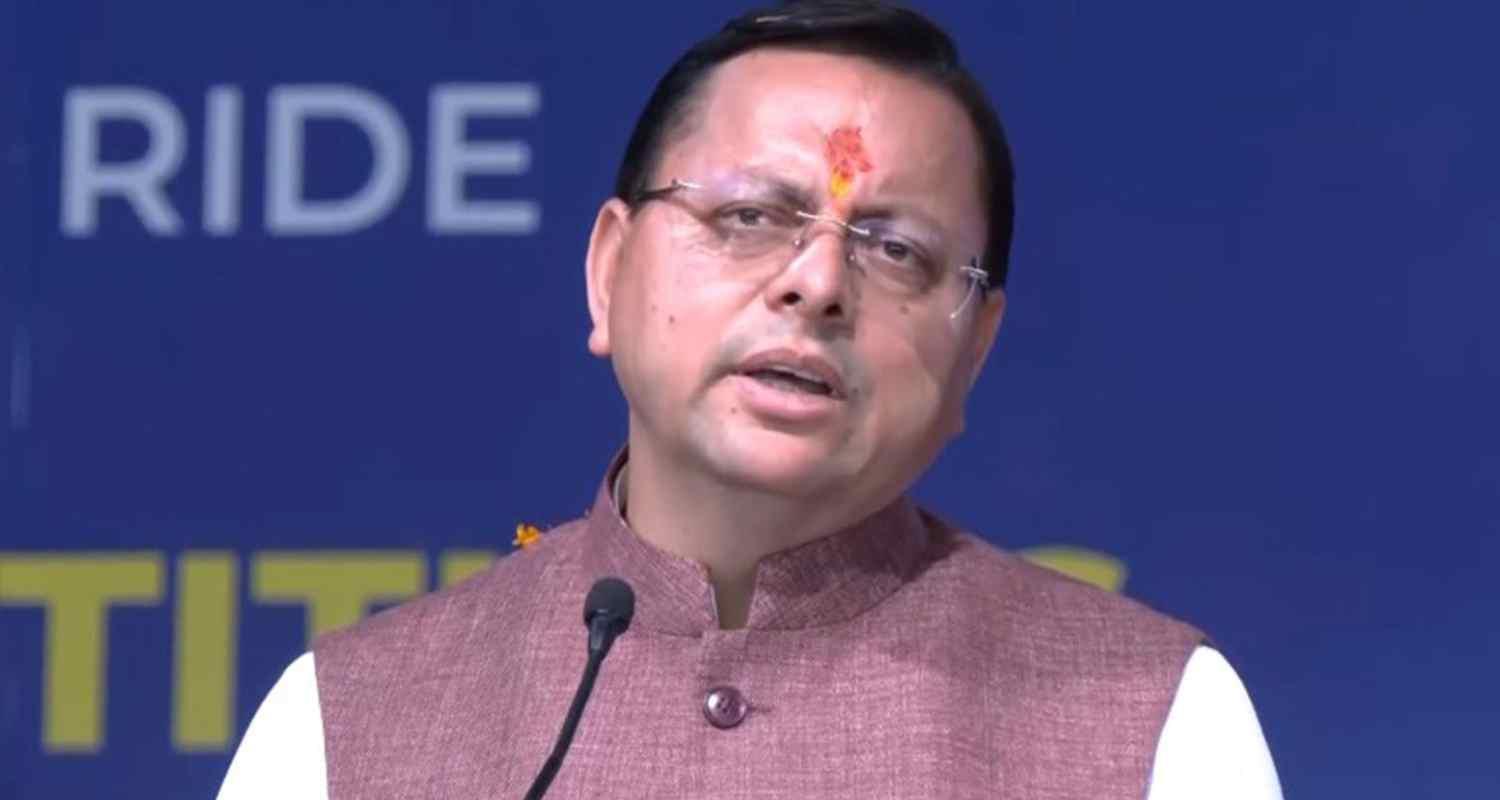
Uttarakhand Chief Minister Pushkar Singh Dhami has said that his government is ready to welcome pilgrims taking part in this year’s Char Dham Yatra without any cap on the number of devotees. The decision, according to the CM, was taken after consultations and review meetings, noting the high preparedness of the administration to ensure a smooth and hassle-free pilgrimage.
He stated that all preparations for the Yatra are going on smoothly, with the state government prioritising the safety and convenience of devotees.
During his media interaction on the sidelines of the review meeting, Dhami said, “A review meeting was held to review the preparations for the Char Dham Yatra (Yamunotri, Gangotri, Kedarnath, Badrinath). All the departments are ready and committed to ensure that the devotees don’t face any problem.”
He added that extensive discussions with stakeholders were held on infrastructure and safety arrangements.
“From roads to drinking water, transport, safety measures, disaster management, heli-services, and addressing cyber challenges — everything was discussed in detail,” he said.
“For the initial period, we have decided to remove the cap on the number of pilgrims so that there are no restrictions. We have relaxed the standards for the number of pilgrims allowed,” he added.
When asked about concerns over the recent snowfall, Dhami said that despite the occurrence of recent snowfall, all arrangements have been streamlined before the Yatra kicks off.
The authorities have been directed to complete all pending developmental work within a fixed timeline.
While responding to a query about the upcoming visit of Prime Minister Narendra Modi, Dhami said he has a strong connection with Uttarakhand.
“Prime Minister Modi has a deep bond with our state, Devbhoomi Uttarakhand. Since he became Prime Minister, several major projects have moved forward — the Char Dham all-weather roads, expansion of health services like AIIMS, and increased heliservices.
He personally undertook the Adi Kailash Yatra and designated Mana as the ‘first village’ of India,” he said.

 Follow us