
Trending:
Falling space debris is becoming a massive threat
A surge in rocket launches is filling orbit with satellites built from tougher, more heat-resistant materials—and when they fall back to Earth, they aren't always burning up the way we expect. Follow us
News Arena Network - Wisconsin - UPDATED: May 19, 2026, 01:01 PM - 2 min read
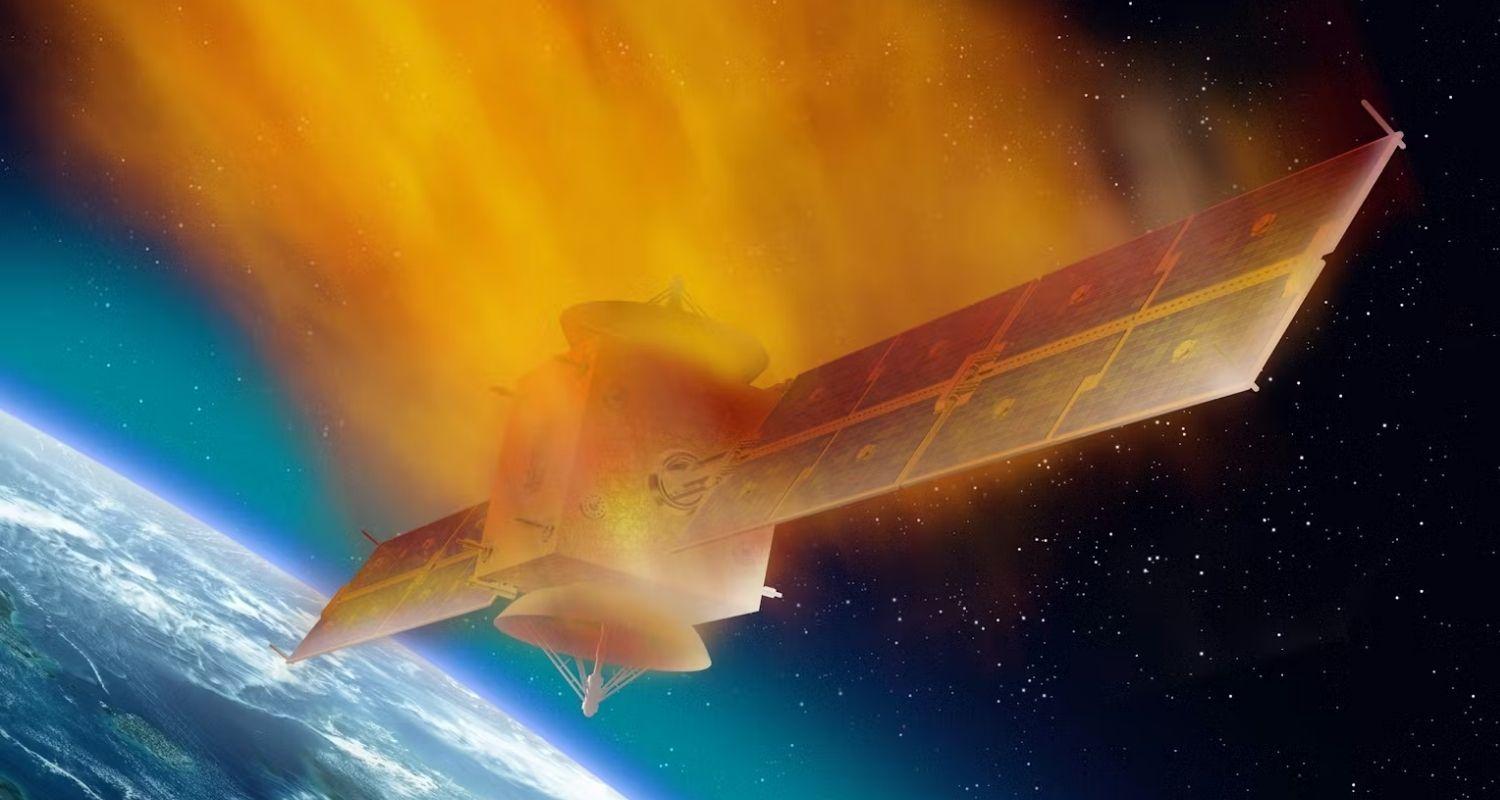
Not all space debris burns up in the atmosphere before it makes it back to Earth.
When it comes to space debris, what goes up is coming down more often – and not safely.
When spacecraft launch, some components, including non-reusable rocket boosters, are jettisoned to decrease weight, leaving them to intentionally burn up as they re-enter the atmosphere. Satellites also enter the atmosphere at the end of their life, supposedly burning up. But in many cases, they are not doing so as predicted.
Debris from partially burned-up spacecraft components and satellites re-entering Earth’s atmosphere can pose a risk to people and structures on the ground. The surge in launches, driven largely by private players such as SpaceX, is turning a once-remote risk into a growing threat.
A research group at the University of Wisconsin-Stout is studying the materials that allow re-entry debris to survive. The team looks for ways to safely modify their exceptional heat-resistant qualities to make them safer for atmospheric re-entry.
Debris landing on Earth
Re-entry debris has fallen on both private and public property around the world multiple times since 2021. Some of the most notable events involve pieces from SpaceX Dragon’s carbon fibre trunk, which stays attached to the crewed capsule until just hours before its re-entry. These trunks are larger than a 15-passenger van and used for storage.
Trunk debris from the Crew 7 mission to the International Space Station has landed in North Carolina, and fragments from the Crew 1 mission landed in New South Wales, Australia. Similarly, debris from the Axiom 3 mission landed in Saskatchewan, Canada.
In addition to trunk debris, carbon fibre components that hold pressurised gases to adjust a spacecraft’s orientation also make up a lot of recovered re-entry debris. Some of these most recent recoveries have been in Australia, Argentina and Poland.
Most of the debris that renters the atmosphere burns up, so why are these pieces making it down to Earth’s surface?
Atmospheric re-entry
Satellites such as SpaceX’s Starlink reside in low Earth orbit, typically between 190 and 1,240 miles (300 and 2000 kilometres) above the Earth’s surface. To stay there, they need to move really fast, at about 17,000 miles (27,000 km) per hour. To reach this speed, a rocket with a million pounds of fuel had to accelerate it, and part of this energy is still contained within the satellite’s momentum.
As an object in orbit drifts down, closer to Earth’s upper atmosphere, it starts to collide with air molecules, slowing the object down. The amount of heat generated from this interaction rapidly consumes the satellite, melting metal at over 3,000 degrees Fahrenheit (1,600 degrees Celsius).
More launches
Countries around the world have been launching items into space since the 1950s, so why is re-entry a concern now?
Starting in the 1960s, about 100 objects were launched into space every year – or at least that was the case until 2016. Since then, the number has been increasing exponentially. In 2016, 200 objects launched. But in 2025, that number was 4,500, meaning 20 per cent of all objects launched into space since the 1950s were launched last year.
Most of these launches came from companies in the United States, such as SpaceX and Rocket Labs. Companies like these, along with those outside of the U.S., have plans for large satellite constellations composed of hundreds of thousands to a million satellites.
Also read: NASA’s Artemis II crew returns after historic Moon mission
The more objects and payloads launched, the more re-entry events occur. Satellite operators are required to remove their decommissioned satellites from orbit after 25 years to comply with regulations set in place by international committees. Groups across the world, including the Federal Communications Commission in the U.S., have pushed to shorten the deorbit window to five years. Because of these guidelines, the full influx of re-entry debris events from these recent launches will not be felt for another 10 or more years.
The objects launched and policy decisions made today will have a lasting effect on future safety.
Carbon fibre
As the world has progressed technologically, efficiency for launching items into space has too.
Satellites and spacecraft are becoming lighter, stronger and more heat resistant because of materials such as carbon fibre-reinforced plastics and new metals. These strong materials are sought after because they’re lightweight, but they can also cause deorbiting debris to withstand re-entry temperatures.
Carbon fibre, once used exclusively in space technology, is now found in common items such as bicycle frames and racing car bodies. It is still the gold standard for fabricating high-strength, low-weight materials for spacecraft components such as rocket fuselages, inter-staging – the protective housing found between the rocket stages – and pressure vessels that experience extreme temperatures and high mechanical stress and strain.
Simple metals such as aluminium and steel melt and burn away, while complex materials such as carbon fibre, which is manufactured at up to 5,000 F (3,000 C), burn away unpredictably, changing the way jettisoned components break up upon re-entry.
Since the early 2000s, a majority of recovered space debris contains either carbon fibre-reinforced plastic sections or metal components wrapped with carbon fibre. The carbon fibre can act as an unintentional heat shield for heavier, more harmful debris.
Design for demise
Design for demise is a major area of research focused on mitigating the risk of re-entry debris. Instead of relying on controlled and meticulously timed deorbits that send components that survive re-entry into the ocean at the end of their lives, spacecraft components are engineered to ensure they completely disintegrate while deorbiting through the atmosphere.
Design for demise can take many forms. These range from changing to more heat-susceptible materials to relocating harder-to-burn components to areas of the spacecraft that will be hotter during re-entry, or using linkages that break apart at high temperatures to separate structures into smaller components to help them burn up.
With so much focus historically on spacecraft being made from the lightest, strongest and most heat-resistant materials available, it may seem counterintuitive to intentionally make some materials weaker. The key is making materials smarter, so they maintain their strength during their mission but weaken under the heat of re-entry.
Via The Conversation
