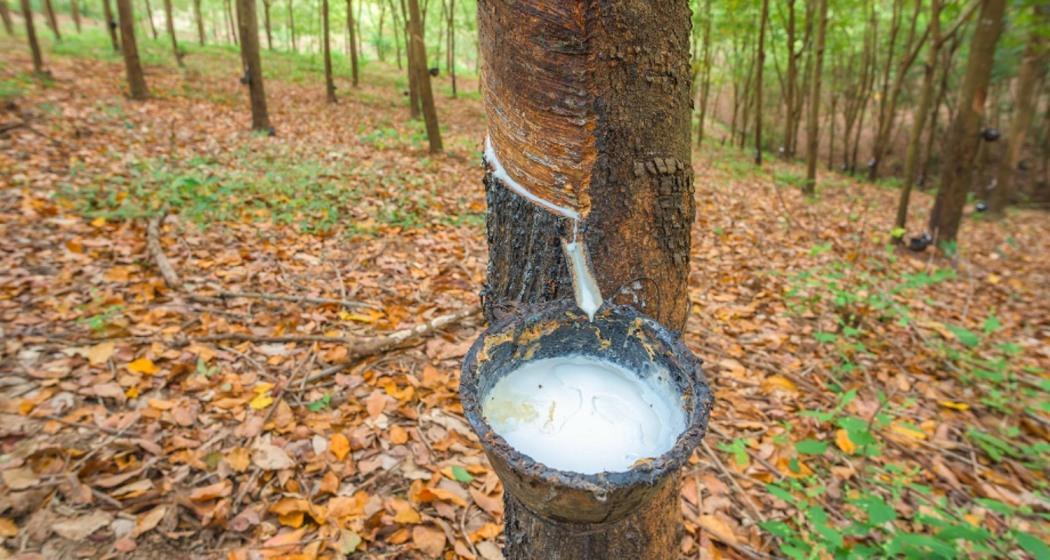
Mizoram has around 50,000 hectares of land suitable for rubber cultivation and plans to bring 11,500 hectares under plantation within five years under the Chief Minister’s Rubber Mission, Chief Minister Lalduhoma said on Friday.
The Chief Minister made the remarks during a visit to rubber plantations at Chungtlang village in Mamit district, as the state government stepped up efforts to position Mizoram as a major rubber-producing state.
Lalduhoma said rubber is indigenous to Mizoram and its cultivation began in 1982 under a government initiative. “Before the Zoram People’s Movement (ZPM) came to power in December 2023, rubber was cultivated on 3,025 hectare of land under various schemes of the government,” he said.
“Mizoram has approximately 50,000 hectare of land suitable for rubber cultivation. We are planning to plant rubber on 11,500 hectare in five years under the Chief Minister’s Rubber Mission,” he added.
The Chief Minister said the government has sanctioned the purchase of 100 rubber roller machines and tapping tools as part of efforts to strengthen plantation infrastructure and productivity.
About 4.5 lakh rubber saplings have already been planted across more than 1,000 hectares in Mamit district, which borders Tripura and Bangladesh, and in Kolasib district under the mission.
Also read: Mizoram CM lays foundation of ₹676-cr Tuirini hydro project
The Land Resources, Soil and Water Conservation Department plans to plant over 11.58 lakh rubber saplings across 2,575 hectares in various districts during the current year. Infrastructure support under the scheme includes construction of approach roads to plantations, supply of roller machines and tapping tools, and facilitation of marketing arrangements.
Addressing a training programme on scientific rubber cultivation in Aizawl on Thursday, Lalduhoma said the Chief Minister’s Rubber Mission was launched in 2024 after consultations with the Rubber Board of India and a study of the Tripura Rubber Mission to ensure a systematic approach.
He said the progress under the mission has exceeded initial expectations due to strong participation from farmers. Although Mizoram attained Union Territory status more than five decades ago, the state lacked a crop that could define its identity, he said.
Lalduhoma added that after the ZPM government assumed office, focused policies led to Mizoram being declared the Ginger Capital of India, a recognition recently accorded by NITI Aayog.
He said rubber and passion fruit, locally known as ‘Sapthei’, are among the most promising crops through which Mizoram can establish a strong agricultural identity while generating sustainable livelihoods.

 Follow us