Researchers at the Hyderabad-based National Institute of Nutrition (NIN) have developed a dietary screening questionnaire that can help identify the extent of diet diversity and risk of micronutrient deficiencies among school-age children in the age group of 6 to 10 years.
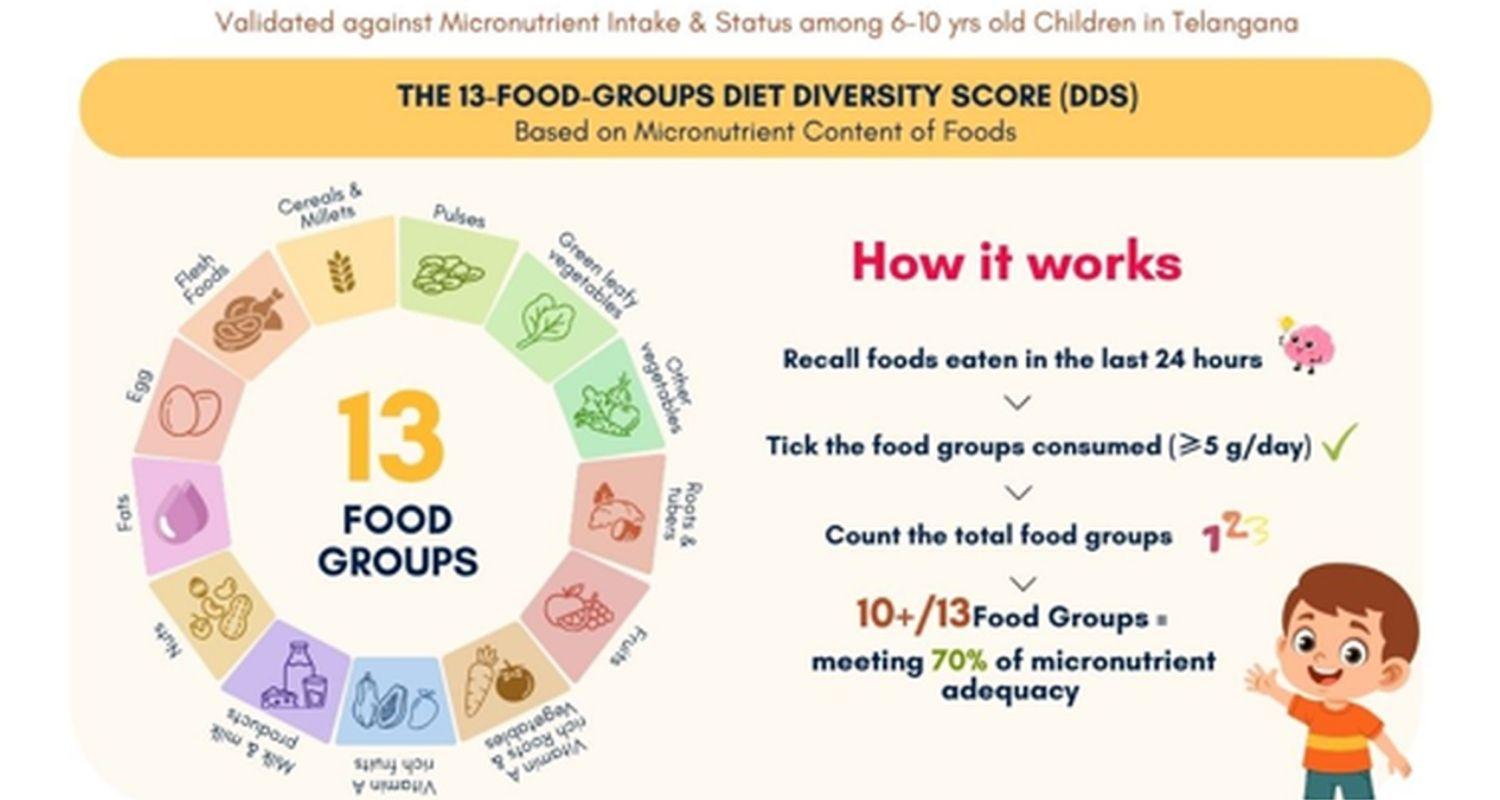
The NIN study, published in the European Journal of Clinical Nutrition, developed a 13-food-group scoring system, in which commonly consumed foods were classified into 13 context-specific food groups based on their micronutrient content.
The NIN research team also developed a Diet Diversity Score (DDS) specifically for Indian children aged 6-10 years.
Another key feature of the tool is the use of a minimum intake threshold of 5 grams, enabling the DDS to capture even small but nutritionally meaningful amounts of food, such as a small cup of pulses, a few bites of fruit or vegetables, or even small quantities of milk consumed in mixed dishes, a press release said.
Also read: Over 1 lakh Telangana students seek mental help, highest in India
The DDS was validated by comparing children’s dietary scores with the adequacy of 10 essential micronutrients and selected biomarkers of nutritional status. The tool showed a significant correlation with overall micronutrient adequacy and hemoglobin levels, supporting its usefulness as a practical screening indicator.
The study found that children consuming foods from 10 or more of the 13 food groups (with at least 5 grams consumed from each group) were significantly more likely to achieve diets meeting at least 70 per cent of daily micronutrient requirements.
Dr. SubbaRao M. Gavaravarapu, Scientist G, ICMR-NIN who led the study said, “The DDS offers a promising approach to identify children at risk of micronutrient inadequacy and supports timely nutrition interventions.”
“The DDS has the potential to support school health programmes, ICDS, teachers, parents, nutritionists and public health professionals in rapidly screening children’s dietary quality. However, further multicentric validation across diverse regions and food environments in India is essential before large-scale implementation,” said Dr Bharati Kulkarni, Director, ICMR-NIN.

 Follow us